
NATO's intervention in Libya in 2011 sidelined the African Union's mediation, triggering a decade of instability across North Africa and the Sahel. The AU's failed peacemaking bid reveals critical lessons for future African security architecture and regional crisis management.
When NATO began airstrikes in Libya in March 2011, the African Union's diplomatic efforts were already sidelined. The AU's high-level committee arrived in Tripoli just as Western military action and a UN Security Council resolution took precedence over African-led talks. Gaddafi's regime fell quickly, leaving Libya fractured and the region unstable-a situation that persists today.
The AU had warned that military intervention would not solve Libya's political crisis. Instead, it predicted a surge in arms trafficking, regional conflicts, and migration across the Mediterranean. More than ten years later, these concerns have played out. The Sahel is flooded with weapons, terrorist groups have expanded, and Libya's instability remains a central issue in North African politics. Algerian authorities, cited by the Algerian Press Service (APS), have repeatedly pointed to the impact of Libyan arms on border security and the rise in cross-border trafficking since 2011.
How the AU's peace plan was sidelined
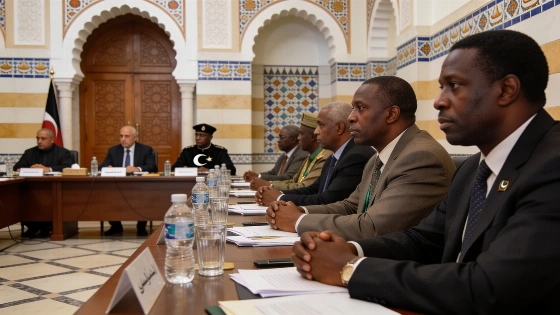
The AU moved quickly as protests in Benghazi turned into armed rebellion. In early 2011, the AU Peace and Security Council condemned the violence and called for restraint. Its four-point plan-ceasefire, humanitarian access, protection of foreign nationals, and political reform-aimed to broker a negotiated transition. An Ad Hoc High-level Committee was sent to open talks between Gaddafi's government and the National Transitional Council (NTC) (APS).
But the AU's plan was quickly overtaken. The UN Security Council, with support from three African members, passed Resolution 1973 on 17 March 2011, authorizing force to protect civilians and imposing a no-fly zone. The resolution passed with 10 votes in favor and 5 abstentions, including from key regional states (see the Maldives government's official statement). NATO intervened within days, shifting the conflict in favor of the rebels. Backed by Western powers, the NTC rejected any deal that did not guarantee Gaddafi's immediate departure. Even when Gaddafi accepted the AU's terms, the rebels saw no reason to negotiate.
Coordination between the AU and UN was minimal. Their first joint meeting came four months into the crisis, after the military campaign had already shaped Libya's future. The AU's mediation was not just ignored-it was made irrelevant by events on the ground. Tunis Afrique Presse (TAP) later reported that Tunisian officials criticized the lack of regional consultation early in the intervention and called for Maghreb states to be included in future crisis management.
Structural weaknesses and external pressure
Several factors undermined the AU's mediation. African states were divided at the UN, weakening their position. NATO's intervention left little room for negotiation. The NTC, under pressure from international backers, refused to engage with the AU. The AU's own committee lacked continuity, expertise, and resources for sustained involvement.
Even with better capacity, the AU would have struggled against the alignment between the rebels and Western powers. The push for regime change left no space for African-led diplomacy. The Moroccan Ministry of Foreign Affairs has since called for stronger AU-UN coordination, especially in crisis zones where instability threatens economic and energy interests in the Maghreb.
Regional fallout and lessons for African security
Libya's collapse has had lasting effects. Weapons have fueled conflicts across the Sahel, and the breakdown of Libyan authority has enabled human trafficking and irregular migration. The AU's inability to influence the outcome has forced a reckoning with the limits of its peace and security framework. In 2026, the UN Security Council reaffirmed support for Libya's sovereignty and backed a new political process under UNSMIL, welcoming an agreement on electoral reforms reached on 30 August, as reported by the UN press office and regional agencies.
For African policymakers, Libya's crisis offers clear lessons. Early, coordinated action with the UN is essential; without it, regional voices are sidelined. Peace processes must be protected from outside military intervention or risk becoming irrelevant. Mediation only works with real buy-in from all conflict parties. And African-led peace efforts require both internal unity and international backing to be effective.
These issues still shape the region. As previously reported, Libya's unresolved political divisions continue to threaten key sectors and regional stability, highlighting the unfinished work left by failed mediation.
The AU's intervention in Libya failed to change the outcome, but it did activate its mechanisms and set out a vision for peaceful transition. The real setback was the international community's preference for force over dialogue, and Africa's inability to present a united front when it mattered. For the African Peace and Security Architecture to be effective, it must learn from Libya: build real capacity, insist on a seat at the table, and resist letting outside actors dictate the continent's crises. Otherwise, the same mistakes will repeat, with growing costs for African security and sovereignty.