
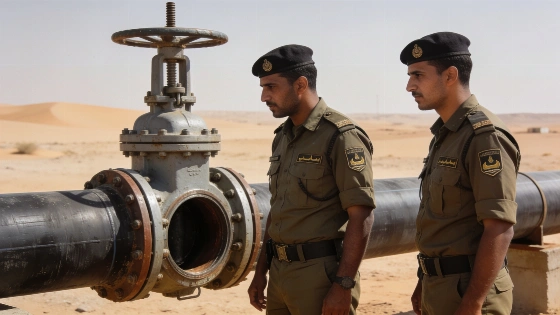
Libya's National Oil Corporation has halted production at key fields after a pipeline valve was forcibly closed by the Petroleum Facilities Guard. With further shutdowns threatened, the NOC is preparing to invoke force majeure, risking a new blow to Libya's oil-dependent economy.
Libya's oil sector is again at risk of grinding to a halt. The National Oil Corporation (NOC) says it may declare force majeure after shutting down the Hamada and Tahara fields. The move came after the Petroleum Facilities Guard deliberately closed a key pipeline valve, cutting off crude flows to the Zawiya refinery and storage network. This puts Libya's already fragile public finances under immediate strain. According to the Algerian Press Service, past disruptions in Libyan oil output have affected regional energy markets, with Algeria and Tunisia watching closely because of their own energy needs.
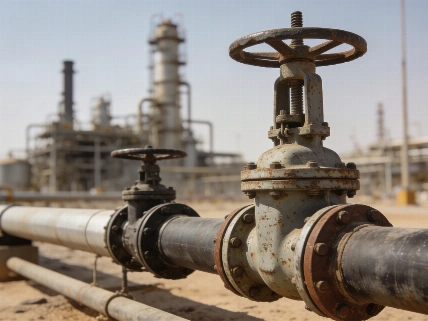
The standoff began when members of the Petroleum Facilities Guard, who are supposed to protect oil infrastructure, shut a valve on the main Hamada-Zawiya pipeline. They are demanding full financial and administrative control under the NOC, removing oversight from the Ministry of Defense. In response, the NOC halted production at Hamada and Tahara and took a key pumping station offline. The affected cluster-including the Agoco-operated Hamada and Tahara fields and the NC5 pumping station-can produce about 10,000 barrels per day. The pipeline connects these fields to the 120,000 b/d Zawiya refinery, which is crucial for both domestic supply and exports, as reported by Argus Media and Reuters. NOC leadership has said that if the disruption continues or spreads, it will invoke force majeure, suspending its contractual obligations and deliveries.
Escalation risks and wider shutdown threats
The Petroleum Facilities Guard has threatened to extend shutdowns to the Wafa, Al-Khamsa, and El Feel fields if their demands are not met within a week, according to Reuters. At Zawiya refinery, guards have blocked the main entrance, forcing operations to use a secondary access point. The Hamada-Zawiya pipeline, which runs 387 kilometers and is 18 inches in diameter, is the main route for moving crude from Libya's interior to the coast. Its closure cuts the supply chain at a critical point. Tunis Afrique Presse notes that a prolonged disruption could also affect refined product flows to Tunisia, which relies on cross-border energy cooperation under the 2022 Maghreb Energy Accord.
Libya's economy depends heavily on oil. Oil revenues fund the state budget and public sector salaries. Any extended shutdown will quickly squeeze government finances and could trigger wider political fallout. The NOC's threat to declare force majeure is a legal step that allows it to suspend obligations when deliveries become impossible. The United Nations Economic Commission for Africa has warned that instability in Libya's oil sector can undermine broader North African economic integration, especially as the African Continental Free Trade Area aims to harmonize energy trade across the region.
Institutional fragmentation and the cost of leverage
This confrontation highlights the ongoing institutional divisions that have troubled Libya's oil sector since 2011. The Petroleum Facilities Guard's move is a direct challenge to the current power structure, aiming to shift control from the Ministry of Defense to the NOC. Similar actions have disrupted production before, including earlier this year. The NOC now faces a choice: give in to the guard's demands and risk weakening its own authority, or hold firm and risk a broader production collapse. The Ministry of Oil and Gas, in a recent official statement, said it remains committed to protecting national energy assets and called for dialogue among all parties.
For international observers and investors, this episode is another reminder that Libya's oil sector remains vulnerable to internal rivalries and shifting alliances. As reported earlier, even national-level political agreements have not shielded the industry from local actors who hold significant leverage over key assets.
This is more than a labor dispute or bureaucratic fight. It is a test of whether Libya's main economic engine can be protected from factional interests. The NOC's threat to invoke force majeure shows how serious the situation is-and how limited its options are. Unless the government regains control over the Petroleum Facilities Guard and restores the oil supply chain, Libya faces another crisis that will be felt not only in Tripoli, but across the region's energy markets.