
Morocco has released Draft Bill 62.25 for public consultation, proposing strict oversight of domestic carbon trading and international emission transfers. The bill introduces a national registry, independent verification, and heavy fines for non-compliance.
Morocco is preparing to tighten control over its carbon market with a new draft law that would add significant regulatory oversight to the country's climate efforts. Draft Bill 62.25, published by the General Secretariat of the Government on 14 September 2026 and open for public comment until mid-October, lays out a system for carbon trading and international emission transfers. The proposal includes a digital registry, mandatory third-party audits, and fines of up to 2 million dirhams for violations, according to the Moroccan news agency MAP and Medias24.
The bill is designed to make Morocco's carbon credits traceable, verified, and compliant with the Paris Agreement's Article 6. It sets up three types of carbon market activity: bilateral cooperative approaches, a carbon credit mechanism, and a voluntary carbon market. These categories follow international standards referenced by the United Nations Economic Commission for Africa (UNECA) and the Ministry of Energy Transition and Sustainable Development.
Centralised registry and project requirements
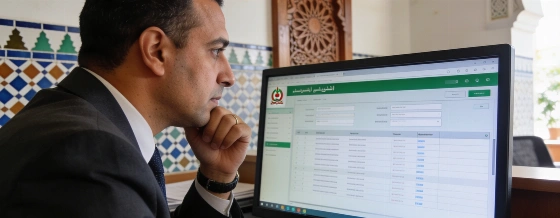
The draft law would create a national electronic registry to record every project that claims to reduce greenhouse gas emissions. This digital system will track project approvals, implementation, and the issuance of carbon credits, as well as permissions for international transfers. Any emission reduction sold abroad must be formally approved and deducted from Morocco's national carbon inventory, in line with its Nationally Determined Contributions (NDCs), as confirmed by the Ministry of Foreign Affairs and African Cooperation.
Project developers will need to clear a detailed administrative review to show their projects fit Morocco's climate priorities and deliver measurable emission cuts. Environmental and social safeguards are required, and authorisations last three years, with the possibility of renewal. Annual progress reports are mandatory. Failing to meet these requirements, such as missing reports or making unauthorised transfers, can result in fines between 500,000 and 2 million dirhams. These penalties also apply to verification bodies that break the rules, as reported by Hespress English and TAP (Tunisia Afrique Presse).
Independent verification and enforcement
Only accredited, independent bodies will be allowed to validate and verify emission reductions. The law requires that no single entity can both validate and verify the same project. Accreditation lasts five years and is renewed only if quality standards are met. Verification bodies that lose independence or falsify data risk losing their accreditation and facing financial penalties. This approach is meant to reinforce the system's credibility, following regional standards set by the African Union's climate governance frameworks.
Administrative fines for non-compliance range from 500,000 to 2 million dirhams. These penalties target failures such as missing annual reports, unauthorised international transfers, or unreported project changes. The aim is to deter fraud and ensure the carbon market operates as intended. The Algerian Press Service (APS) also covered the draft law's publication, noting its potential to set a new compliance standard for the Maghreb region.
Climate transparency and governance
The bill also calls for a national climate transparency platform to monitor climate indicators, track public spending, and account for international climate finance. Oversight will be handled by a new commission that brings together public institutions, environmental agencies, and climate associations. This is meant to connect the carbon market with Morocco's broader economic and policy framework. The government's approach matches recent regional efforts to harmonise climate reporting and transparency, as seen in joint declarations by Maghreb environment ministries and the African Union Commission.
This regulatory update comes as Morocco seeks to attract green investment and strengthen its reputation as a credible climate actor. It follows a series of climate initiatives, including the country's expansion into renewable fuels as reported earlier. For more details on Morocco's climate policy and legislative process, see the official government portal.
Draft Bill 62.25 is still under discussion, but its release signals a move toward a stricter, rules-based carbon market. If passed, the law would set a new regional standard for climate compliance, making Morocco more attractive for international climate finance and helping protect the credibility of its emission reduction targets. The government's willingness to impose strict oversight and real penalties makes clear that Morocco expects all market participants to follow global rules.