
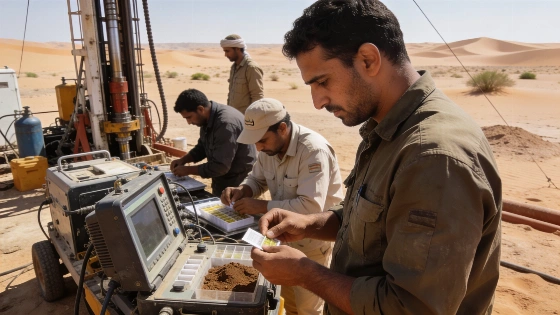
Russia's state geological firm Rosgeologia has begun exploring for deep underground water in Libya's Sahara Desert, aiming to identify new aquifers to support Libya's fragile water infrastructure amid ongoing supply disruptions.
Russia's state-owned geological company Rosgeologia has initiated a search for deep underground water reserves in Libya's Sahara Desert, according to Russian Natural Resources Minister Aleksandr Kozlov. The project, confirmed by Russian authorities, represents a significant intervention in Libya's water sector, which faces chronic stress and infrastructure challenges.
Rosgeologia is deploying advanced geological mapping and exploration methods to identify untapped aquifers beneath the desert. The effort comes as Libya's water infrastructure remains vulnerable, with recent disruptions such as the armed shutdown of the Man-Made River (MMR) system cutting water to millions. The MMR project, which supplies over 70% of Libya's population with non-renewable fossil water, has faced setbacks since 2011, including damage to key infrastructure during the conflict.
Strategic Importance for Libya's Water Security
Libya is among the world's most water-stressed countries, lacking permanent rivers and relying heavily on deep desert aquifers. The discovery of new groundwater sources is seen as critical to stabilizing supply and reducing the risk of future disruptions. Russian involvement signals both a technical and geopolitical dimension, as external actors seek influence in Libya's strategic sectors.
Regional Cooperation and Resource Management
The Russian-led initiative coincides with renewed regional efforts to manage shared water resources. Libya recently signed the Tripoli Declaration with Algeria and Tunisia, committing to equitable management of the North-Western Sahara Aquifer System. The outcome of Rosgeologia's exploration could shape both national water policy and cross-border cooperation in the Maghreb.