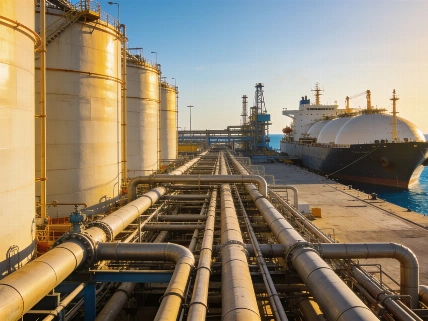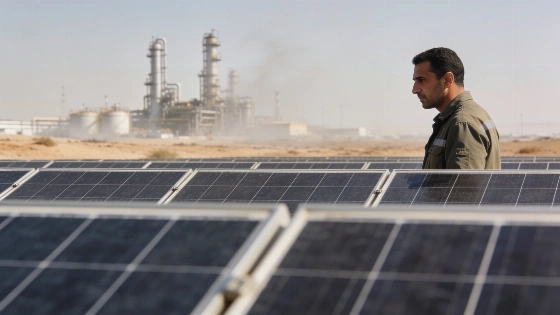
At the Moscow GECF summit, Tebboune set out Algeria's 15,000 MW renewable target for 2035 and backed gas as a pillar of energy security. He also supported the proposed Trans-Saharan pipeline and hydrogen exports.
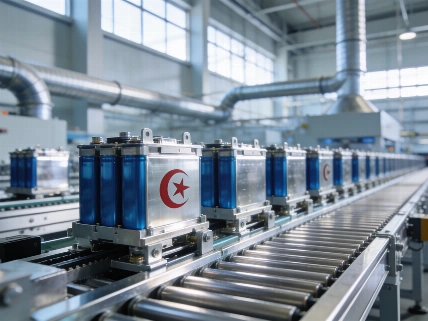
Algeria plans to develop 15,000 megawatts of renewable energy capacity by 2035, backed by an investment envelope of approximately €22 billion. Prime Minister Sifi Ghrieb delivered the announcement on behalf of President Abdelmadjid Tebboune at the eighth Summit of Heads of State and Government of the Gas Exporting Countries Forum (GECF) in Moscow on 27 October 2026. The programme is part of an energy transition that Tebboune said would preserve Algeria's role as a major natural-gas producer and exporter.
Tebboune linked the renewable target to continued investment in natural gas. He called for stable energy markets and predictable regulation, arguing that major gas infrastructure investments require secure rules and fair pricing, particularly in long-term contracts. He also urged GECF members to strengthen cooperation to support market stability and supply security amid geopolitical tensions. Algérie Presse Service reported Algeria's position on the investment structure.
Gas and renewables in Algeria's energy strategy
The president described natural gas as a lasting pillar of national economies and a partner to renewable energy. He called gas a bridge to a safe energy transition, rather than an obstacle, and urged a gradual, inclusive process that does not place disproportionate costs on developing countries. Tebboune also said each country has the sovereign right to determine its energy policy. Gas prices, he argued, should reflect the resource's value, particularly in long-term contracts.
Alongside the renewable build-out, Tebboune said Algeria would seek to lower industrial carbon intensity and cut methane emissions. Its plans also include reducing flaring and pursuing carbon capture. He described this approach as a way for Algeria to shape its own energy transition while continuing to produce and export natural gas.
Algeria aims to expand its role in hydrogen through the South2 Corridor, under development with European partners and Tunisia. The initiative is expected to support exports of gas and electricity. It also covers ammonia and hydrogen.
Pipeline proposal and supply commitments
The proposed Trans-Saharan Gas Pipeline is planned to carry 30 billion cubic metres annually. Tebboune presented it as a potential contributor to African development and energy access. He said Algeria would provide expertise and financial resources to support its completion.
He also cited Algeria's established gas industry, including the liquefaction complex inaugurated in Arzew in 1964, which he described as the world's first. Information from Tebboune, Algeria is among the world's ten largest gas producers and the European Union's second-largest supplier of pipeline gas. He said the country would continue to meet its contractual obligations.
The address urged GECF members to coordinate around market stability and supply security, then develop exports into new markets through South-South cooperation. Tebboune also recalled the Algiers Declaration, adopted at the 2024 summit hosted by Algeria, as a statement reinforcing the strategic role of natural gas in global energy security. The eighth summit concluded with the adoption of the Moscow Declaration. Separately, Morocco's partnership talks with Senegal and the DRC cover a regional diplomatic track.
Ghrieb arrived in Moscow on 26 October to represent Tebboune at the GECF summit and other Russia-Africa meetings. He represented the president at the 27 October summit, where Tebboune's message called for stronger cooperation among gas exporters. Algeria's delegation also included Foreign Minister Ahmed Attaf and Hydrocarbons Minister Mohamed Arkab. On the sidelines of the GECF gathering, Arkab met Azerbaijani Energy Minister Parviz Shahbazov to discuss bilateral hydrocarbon cooperation and ways to expand their partnership.