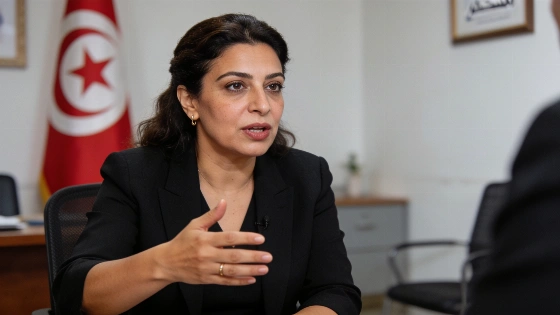
Rana Taha says Tunisia and the UN share a two-state framework for a lasting Palestinian settlement. She also cited the Security Council's political limits and the UN's continuing humanitarian work amid the Gaza war.
The United Nations had lost at least 376 employees by October 2025, its largest loss of life in history, Resident Coordinator Rana Taha said. A later UNRWA situation report recorded 394 colleagues killed in Gaza since the start of the war, comprising 311 UNRWA personnel and 83 people supporting the agency, as of October 20, 2026.
In an exclusive interview with Tunis Afrique Presse (TAP), Taha said Tunisia and the UN hold convergent positions on a just and lasting resolution of the Palestinian question through a two-state solution. The UN framework for a settlement emphasizes Palestinian self-determination and civilian protection, alongside compliance with international humanitarian law. A Gulf Cooperation Council statement to the General Assembly called for practical and credible steps towards a just and comprehensive solution to the Palestinian question.
Tunisia's diplomatic position
Taha said Tunisia continues diplomatic efforts in support of Palestinians' right to self-determination and the establishment of an independent state. Those efforts are coordinated with Arab countries and international partners. In a statement to the General Assembly's Third Committee during its 81st session, Tunisia said the right to self-determination cannot be selective and that the Palestinian people's right was "not a privilege to be negotiated," as recorded in the UN committee transcript. Tunisia's wider external engagement includes the EU-Tunisia partnership.
She said the scale of human loss and destruction in the Gaza Strip had shocked everyone. Taha expressed frustration at the Security Council's inability to stop the war, while noting that the UN continues to call for peace and deliver humanitarian aid to millions of Palestinians under extremely dangerous conditions. UN humanitarian reporting has also described substantial needs for shelter and household items: approximately 37,000 families were awaiting shelter support and 32,000 were waiting for basic household items. During the reported week, humanitarian partners provided mental-health and psychosocial support to nearly 4,500 children and more than 2,000 caregivers.
Security Council limits
The UN's ability to end conflicts depends on political consensus among Security Council member states, Taha said. According to a UN meeting summary, the Council's diplomatic engagement can help contain escalation and facilitate ceasefires, while supporting safe, unhindered humanitarian access. She added that this constraint does not halt the organization's diplomatic work or humanitarian efforts. The UN also continues to defend respect for international law and the protection of civilians.
International legal developments have addressed humanitarian obligations in the occupied Palestinian territory. A Gulf Cooperation Council statement to the General Assembly referred to the International Court of Justice advisory opinion of October 22, 2025, on Israel's obligations in and in relation to the territory, including access to necessities of daily life and the protection of humanitarian personnel and facilities. The statement also cited the Court's January 26, 2024 provisional-measures order concerning the protection of the Palestinian people.
UN operational briefings have reported security incidents affecting aid operations and displaced civilians, including small-arms fire near a UN-contracted facility in Deir al-Balah and gunfire that damaged tents at a displacement site in northern Rafah, where injuries were reported. The UN has called for civilian protection and for humanitarian aid to reach people safely and without interruption.
Tunisia joined the United Nations on November 12, 1956.