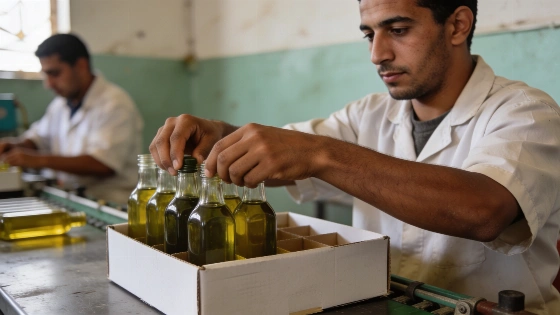
Tunisia has about 40 halal-certified companies, and halal-sector export operations are estimated at TND 1.3 billion, led by food products. At a September forum, officials and businesses outlined plans to widen certification, improve logistics and financing, and build a larger regional role.
Tunisia's first International Halal Forum met at the Export Promotion Center (CEPEX) on September 29-30, 2026. Participants discussed a sector that has nearly doubled its number of certified companies since 2023, reaching about 40 firms. Export operations linked to the sector are estimated at TND 1.3 billion, mainly from food products.
The forum paired business-to-business meetings with panels on export opportunities and Tunisia's place as a regional halal hub. The figures point to a base, not yet a broad export network. Firms still need recognized certification, overseas buyers and investors, and reliable logistics. The obstacles are sharpest for North African businesses that want to sell in markets with different import rules and standards. The gap is real.
Mamadou Bocar Sall, Deputy Director General of the Islamic Centre for Development of Trade, named agri-food products, olive oil, seafood, financial services, tourism and cosmetics as areas with potential for Tunisia. He cited an annual global halal goods-and-services market estimate of $9 billion. That figure cannot be directly compared with separate estimates of Muslim consumer spending or Islamic finance assets. Those measure wider economic activity.
Sall called for wider halal certification of agricultural products, stronger export promotion and better logistics. He also urged Tunisia to make agreements with Organization of Islamic Cooperation member states and countries in Asia, the Arab world and Africa. That agenda fits CEPEX's stated aim of building trade links between Europe and Africa. The agency's official CEPEX portal explains its export-promotion role.
Kais Belaid, president of FIBGN Global Business Network and a forum co-organizer, said firms need practical ways to reach markets. They need links to standards, buyers and investors. He described a role for Tunisia's National Institute of Standardization and Industrial Property (INNORPI) in bringing standardization and certification bodies into dialogue and advancing mutual recognition. Certification alone falls short. Businesses must also meet the rules in the markets they want to enter.
Sall proposed setting up a Higher Halal Council under the Ministry of Trade and Export Development. He said it should involve stakeholders such as UTICA, FIPA, CEPEX and the Ministry of Industry. The proposed council would support trade and investment rules with other countries, particularly OIC members. Sall also called for laws and regulations to further develop Islamic finance. Neither proposal has been adopted.
CEPEX chief executive Mourad Ben Hassine said Tunisia was seeking to host the 2027 World Halal Summit, organized annually by the Standards and Metrology Institute for Islamic Countries (SMIIC). Work with the Ministry of Trade and Export Development was under way to secure the event. The bid is part of a wider effort to raise Tunisia's profile in the halal economy. Hosting a summit would not, on its own, clear the certification, financing and logistics barriers exporters face.
The forum also heard estimates that Muslim consumer spending reached about $2.6 trillion in 2024 and could rise to $3.56 trillion by 2029. Belaid put Islamic finance at nearly $6 trillion. He cited annual growth rates of 6.5% for halal consumption, more than 10% for Islamic finance and more than 11% for tourism. These are broad market estimates presented at the forum. They do not measure Tunisia's addressable export market or guarantee Tunisian firms a share. The numbers need context.
The export agenda also sits alongside debate over business costs. Our tax-burden analysis set out the difference between tax revenue at 26.1% of GDP in 2025 and an estimated tax burden of 35.5%.
Financing was another practical focus. The forum ended with a memorandum of understanding between FIBGN and the Bank of Tunisia and the Emirates (BTE). It is intended to help small and very small enterprises fund process development and obtain halal certifications. Separately, CEPEX reported an agreement involving World Business Union and BTE to support small and medium-sized businesses with product development, production methods and certification. The agreements are meant to help firms cover the cost of upgrades. Their impact will depend on access to funds and how participating firms put them into practice.
Trade and Export Development Minister Samir Abid called for a competitive Tunisian-African halal product offering. He said the state, businesses, professional organizations, universities, and research and training centers should coordinate to build it. Firms will need to show they meet market requirements, keep production consistent and find routes to buyers in African and other markets. Execution will decide.
Tunisia has a starting base of certified companies and food exports. The proposed council and 2027 summit remain plans, not outcomes. The work ahead is clear: make certification trusted across markets, improve logistics and help smaller firms pay for necessary changes. Without progress on those basics, Tunisia's ambition to bridge Europe and Africa will remain a pitch, not a lasting trading position.