
Tunisia's economy grew 2.4% in the first half of the year, but shortages of staple foods and bottled water persist. Import and distribution delays, tight public finances, and recurring water and power disruptions continue to strain household supplies.
On September 25, Tunisia's Ministry of Trade said it had more than 7,000 tonnes of bulk rice available. It planned to release over 100 tonnes a day to the market from the following week. The ministry also announced a separate program to distribute 3,000 tonnes of sugar for household use, as reported by Mosaïque FM.
The plans may ease shortages, but supplies must reach consumers first. Delays with imports and thin inventories leave households exposed when deliveries falter. Tunisia's economy grew 2.4% in the first half of the year, but that growth has not kept staple foods and bottled water on shelves.
The pressure runs deeper than a seasonal shortage. Output can grow even as the public bodies and infrastructure that secure essential goods struggle to keep up. The gap is real.
Economist Bassem Ennaifer told Anadolu that Tunisia's public finances have absorbed three major shocks over six years: the COVID-19 pandemic, the Russia-Ukraine war, and new economic pressures. He linked continuing shortages of subsidized sugar, rice, and tea to the debt burden and funding constraints of the Tunisian Trade Office. Those constraints have hindered supplies.
The country's strained finances are part of a wider debate explored in Maghreb Insider's tax burden analysis. The immediate shortages also reflect delays in imports and problems with production and distribution.
A ministry representative rejected reports that official prices had risen for fuel, household gas, milk, sugar, vegetable oil, semolina, and flour. The representative blamed logistics and the restoration of supplies, not price changes. Economists have put more weight on funding and production constraints. Both accounts point to problems beyond seasonal demand.
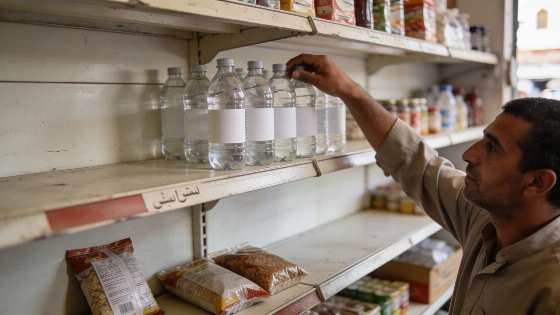
For bottled water, Ennaifer pointed to a different weak spot. Wholesalers no longer keep large inventories to meet spikes in demand during hot weather. The shortages recall the widespread bread supply crisis of summer 2023. Distribution can come under pressure fast.
Water and electricity disruptions have added to the strain. Millions of people were affected during the summer, and long queues formed for bottled water. Supplies eased in part after authorities sent millions of bottles to shops in late August.
A France 24 review says some areas have faced recurring water restrictions since 2023. It also points to years of underinvestment in infrastructure. This is more than a temporary demand problem. World Bank assessments cited in regional coverage warn that water scarcity can also hurt agriculture, employment, and wider economic activity.
On September 29, the national water utility SONEDE announced planned drinking-water interruptions from September 30 in parts of the governorates of Medenine, Tataouine, and Gabès. The interruptions were set to take place during preventive work at the Zar at desalination plant. SONEDE expected supplies to resume on October 1 at 22:00, according to La Presse de Tunisie. Maintenance at critical infrastructure can disrupt household supplies at once.
Economics professor Ridha Chkoundali said the shortages now go beyond seasonal demand. Liquidity constraints have delayed imports of subsidized products. Power outages and technical problems at local facilities have also slowed production. He said structural, financial, and regulatory problems require comprehensive reforms.
The 2.4% growth figure also fell short of the 3.3% target. Chkoundali warned that higher oil prices and instability in the Middle East could further slow the recovery in the second half of the year.
Agricultural growth has done little to ease pressure on domestic food supplies. Tunisia's olive oil production has boomed, but the vast majority of output has gone to export markets. Falling water resources and rising energy costs could eventually affect fuel supplies, Chkoundali warned. If current problems go unaddressed, shortages could worsen.
Tunisian authorities have blamed hoarding and market manipulation. The Saied administration has accused speculators of deliberately withholding goods to provoke a politically charged crisis. Those are the government's claims. Economists have also pointed to financing constraints, import delays, production interruptions, and weak inventory buffers.
Tunisia's 2.4% growth is real. It does not prove that essential supply systems can withstand disruption. Public import financing, local production, and distribution must hold up during demand spikes and operational problems. Until then, the recovery will remain fragile where households feel it most: access to basic goods.