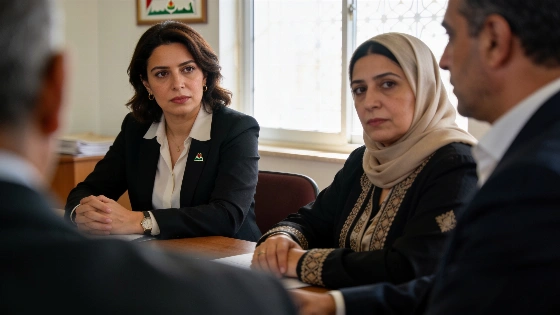
Fatima Ezzahra El Mansouri must build a coalition after PAM won 97 of 395 seats. Morocco's state-level foreign-policy channels make a sharp break with Israel unlikely, even as her government faces pressure over jobs, water and public opposition to closer ties.
PAM won 97 of 395 seats in Morocco's September 23 election. King Mohammed VI appointed Fatima Ezzahra El Mansouri as prime minister on September 29, but she does not have a parliamentary majority.
A majority requires 198 seats. The gap is wide.
Election results reported by Reuters through RFI's election coverage put the National Rally of Independents, or RNI, on 66 seats and Istiqlal on 65. Together with PAM, the three parties have enough seats for a majority. The numbers do not guarantee agreement on policy or cabinet posts.
Coalition talks come first. During the campaign, PAM ruled out continuing with RNI, and the parties blamed each other for policy shortcomings. After the vote, El Mansouri said there would be no "red lines" in coalition talks. That leaves a renewed alliance possible. On September 29, RNI was still weighing whether to join another government with PAM, amid reported internal opposition.
The coalition's shape will set the new government's room to act. Before policy comes a coalition that can carry it.
Morocco's economic pressure is clear. The High Commission for Planning, the country's national statistics agency, reported unemployment of 13 percent in 2025. The rate was 37.2 percent among people aged 15 to 24 and 20.5 percent among women. Jobs and access to work will be central tests for the incoming cabinet. The World Bank has also identified weak job creation, low female labour-force participation, regional disparities and water scarcity as structural challenges.
Delivery will test the government's ability to govern, not just its list of projects. Employment benchmarks, apprenticeship funding tied to job placement and water-efficiency targets could give coalition partners shared measures. Those steps could also unsettle ministries and institutions whose authority or budgets are affected by reform. These are possible approaches, not policies already adopted.
Foreign policy has a different anchor. Morocco's constitutional system gives the monarch a central role in strategic matters, including foreign affairs and defense. The head of government, by contrast, must come from the party with the most seats. The Moroccan Ministry of Foreign Affairs, led by Nasser Bourita, handles state diplomacy. A change of cabinet does not automatically rewrite the country's external relationships.
That distinction matters for Israel. Morocco restored diplomatic relations with Israel in December 2020 as part of the Abraham Accords, alongside the United States' recognition of Moroccan sovereignty over Western Sahara. On September 16 in New York, Bourita and Israeli Foreign Minister Gideon Sa'ar confirmed plans to raise the countries' diplomatic missions to full embassies and exchange ambassadors. They also discussed expanding direct flights and advancing agreements on investment protection and avoiding double taxation. Those were announced plans, not proof that the proposed agreements had been signed.
The announcement came before El Mansouri's appointment. Rabat's plans also appeared in an earlier report. State-level continuity does not put the relationship beyond domestic debate. During 2026 protests, demonstrators used the slogan "no ambassador, no embassy" to oppose deeper ties amid the Palestinian issue. The Jerusalem Post reported the protest demand. Rabat's broader challenge is to pursue official cooperation without dismissing public sentiment.
Water offers a direct test of whether diplomacy can deliver practical results. Morocco's prolonged drought and water stress make efficiency, reuse, desalination and agricultural resilience strategic priorities. Israeli firms and researchers have experience in areas such as drip irrigation, wastewater reuse, desalination and leak detection. Moroccan institutions bring local knowledge, infrastructure and workforce capacity. Any joint projects could be judged by measurable savings in water, energy and operating costs. These remain potential areas of cooperation, not confirmed programmes.
Food security and cybersecurity are also possible areas for practical cooperation. Agricultural work could focus on drought-resistant production and efficient irrigation. Cybersecurity collaboration could focus on protecting hospitals, utilities, ports, financial systems and municipalities as Morocco's digital economy expands. In both fields, lasting value would come from capabilities used by institutions and businesses, not diplomatic ceremony.
The Maghreb's wider economic context makes it important to turn policy into services and opportunity. Regional comparisons need care: the available figures here describe Morocco and should not be treated as statistics for Algeria, Tunisia, Libya or Mauritania. For the new cabinet, the immediate test is whether employment and water policies reach households and businesses across the country.
Domestic credibility is another constraint. Turnout was about 38 percent in the September election, down from roughly 50 percent in 2021. Those figures do not explain every voter's choice. They do increase pressure on elected institutions to connect promises with visible results.
El Mansouri's experience as a former housing minister and mayor of Marrakech gives her a view of national policy and local administration. It does not guarantee she can hold a coalition together. Negotiations are the first test. The next is whether ministries can turn any agreement into better employment pathways and more reliable services.
Morocco's strategic ties with Israel are unlikely to turn on one cabinet. The monarchy anchors foreign policy, and state-to-state channels were advancing before El Mansouri took office. Public opposition and coalition politics remain real constraints. The stronger test is whether cooperation produces practical gains as the new government tackles the jobs and water problems voters face. The Abraham Accords' resilience will be measured in working institutions and tangible outcomes, not in claims that domestic politics cannot touch them.