
Morocco received 51,050 tons of Chinese ammonia in May 2026, about 27.6% of China's monthly exports. OCP uses imported ammonia to make phosphate fertilizer, while tighter Chinese inspections and higher input costs put the value and limits of Morocco's processing capacity in focus.
Morocco received 51,050 tons of ammonia from China in May 2026, out of 185,000 tons exported that month. The shipment accounted for about 27.6% of the total, up 163.36% from April, according to figures attributed to China's General Administration of Customs. It made Morocco the largest recorded destination for the month, not necessarily a lasting leader in the trade.
Australia followed with 34,344 tons. South Africa received 24,997 tons and India 24,683 tons. The figures show sizable flows to North Africa and the Southern Hemisphere. One month proves little about lasting changes in global supply.
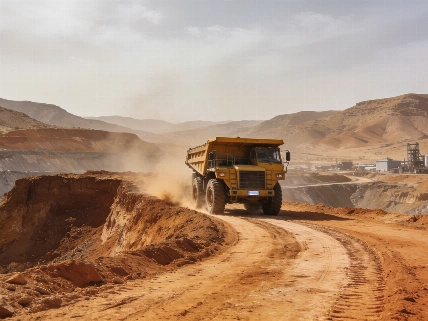
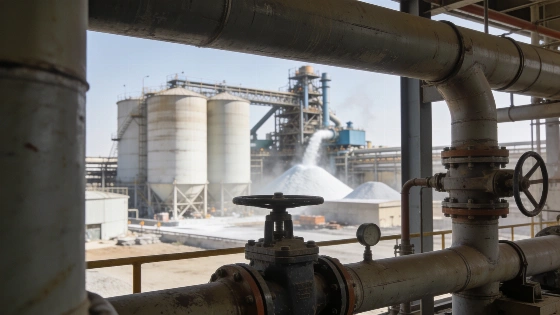
The significance for Morocco lies in what happens after the ammonia arrives. OCP Group processes imported ammonia at its industrial complexes in Jorf Lasfar and Safi. The company uses it to make diammonium phosphate (DAP) and monoammonium phosphate (MAP) for domestic use and export. That puts Morocco in the fertilizer production chain, rather than making it only a destination for imported ammonia.
China's wider fertilizer trade helps put the shipment in context. In the first five months of 2026, Chinese fertilizer exports rose 11.9% to 14.36 million tons. Their value increased 23.4% to $3.347 billion. Ammonium sulfate exports climbed 20% to 8.37 million tons, while DAP exports fell by nearly 80%. The headline growth hides a sharp difference between products.
Supply access matters across African agriculture. Estimates cited in the underlying reporting put fertilizer imports at roughly 80% of sub-Saharan supply. The same estimates place average fertilizer use below 25 kilograms per hectare across 37 sub-Saharan countries, compared with a global average of 139 kilograms. These figures point to broad supply and affordability problems. They do not show that Moroccan production alone can close the gap. The UN Economic Commission for Africa offers regional analysis that can help put national trade figures in context.
Industrial routes differ across the Maghreb. Morocco's phosphate-processing and export chain is distinct from Algeria's plans to link mineral production with maritime logistics. An Annaba terminal project is intended to connect mining sites with global markets. Trade and investment need to be assessed country by country. Morocco's MAP and Algeria's APS provide national reporting. Tunisia's TAP offers a separate view of developments in the region.
China's controls also need a precise description. From July 16, 2026, fertilizers, including ammonium sulfate, were subject to strengthened inspection requirements before shipment, according to reporting based on Chinese customs information. This is an inspection regime. It is not evidence that all fertilizer exports were prohibited. For Moroccan buyers and processors, the difference matters. Compliance checks may affect timing and logistics even when trade remains possible.
OCP's operating results show its exposure to input costs. Reports on the group's first-half 2026 results put revenue at 48.37 billion dirhams and EBITDA at 13.31 billion dirhams. Those reports identified higher sulfur and ammonia prices as pressures on performance. Processing imported feedstock can add value. It cannot shield a producer from volatile input costs.
OCP has also set longer-term goals to reduce its reliance on imported ammonia. Corporate plans reported in the regional press target green ammonia production of 1 million tons by 2027 and 3 million tons by 2032. These are future targets, not current output. Reaching them will depend on investment and the development of renewable-energy and production capacity.
Other reported fertilizer projects in Africa include a potash investment in Congo-Brazzaville, a urea plant in Zambia involving Wuhuan Engineering, and a phosphate complex in Egypt involving Sichuan Jinnuo. These projects reflect wider efforts to expand regional production. Their announced scale and status do not prove that the capacity is complete. Estimates put the African fertilizer market at $16.7 billion in 2025, with a projection of $23.43 billion by 2031.
Morocco's May shipment matters because OCP can turn ammonia into phosphate products for export. Import volumes, processing capacity and domestic production measure different things. China's inspection requirements and higher sulfur and ammonia costs strengthen the case for reliable supply and local processing. OCP's green ammonia targets point to a longer-term effort to reduce import exposure. One month's trade data shows Morocco's place in that month's shipment pattern. It does not establish a permanent ranking or close the region's fertilizer-access gap.