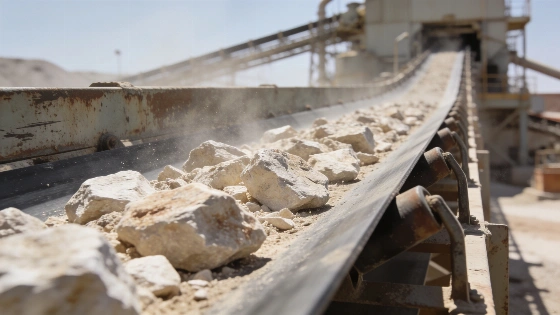
Tunisia wants to raise annual phosphate production to 10 million tons and process 60% to 70% into higher-value products. CPG produced about 3.9 million tons in 2025, while major investment and infrastructure needs remain.
At Tunisia's state-owned Compagnie des phosphates de Gafsa, work is under way to upgrade production sites and improve their performance. The government has not announced a timetable for reaching its target.
The goal is to raise annual phosphate production to 10 million tons and process 60% to 70% of extracted phosphate into higher-value products, including fertilizers. That plan depends on expanding mining while building up domestic processing.
Slah Zouari, the minister responsible for Industry, Mines and Energy, outlined the strategy in an interview with Attaqa.net. The stated production goal is a return to earlier levels, not a result already achieved.
The gap is large. CPG produced about 3.9 million tons in 2025, according to figures presented to parliament in April 2026 and reported by Webdo. Reaching 10 million tons would require output to increase by more than two and a half times.
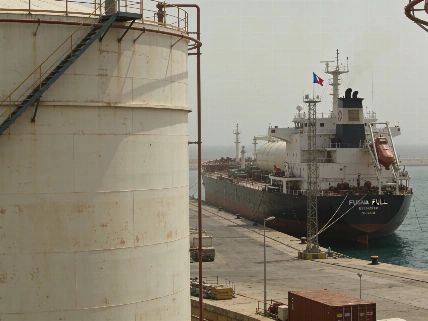
Mines and processing plants are only part of the problem. Transport issues have weighed on CPG's output for several years. Water shortages and financial difficulties have added pressure.
The Tunisian parliament's Industry and Energy Committee has called for funding across the full chain, from extraction through chemical processing, with transport and washing included. Committee rapporteur Mohamed Ali Fenira estimated that restoring the sector would require around 15 billion Tunisian dinars over five years. The estimate covers equipment renewal and infrastructure, along with mining and downstream processing, according to AllAfrica's report.
That estimate is far larger than a separate plan from CPG and Groupe chimique tunisien, reportedly valued at about 2.7 billion dinars. The plan targets commercial output of 9.4 million tons by 2035. The two figures cover different plans and measures of output, so they are not interchangeable.
Processing drives much of the economic case for expansion. Turning more phosphate into fertilizers and other chemical products could leave more value in Tunisia. Reaching the 60% to 70% processing target also requires dependable transport and water, as well as energy and industrial capacity beyond the extraction sites.
The production plan faces a different test of state capacity from the electricity pressures covered in earlier reporting. The announcement does not name all the sites being upgraded or say when the work will lift output. Future updates from Tunisia's state news agency TAP and the Ministry of Industry, Mines and Energy will provide further implementation milestones.
The CPG and Groupe chimique tunisien plan targets commercial output of 9.4 million tons by 2035.