
Tunisia is moving to redefine its role in the automotive sector by targeting electric mobility and innovation, seeking to offer Europe a sustainable alternative to China and showcase its manufacturing capabilities beyond traditional components.
Tunisia is stepping out of its traditional role as a quiet supplier in Europe's automotive industry. The country is now working to become a regional center for electric mobility, aiming to move beyond its established reputation for making automotive parts. According to the Tunisian Investment Promotion Agency (APII), as of August 2026, Tunisia has 4,519 manufacturing units and employs over 527,000 people in industry. The electrical, electronic, and household appliance sectors alone account for nearly 119,000 jobs, or 22.6% of all industrial employment. This industrial base gives Tunisia a foundation as it shifts toward electromobility and advanced automotive technologies.
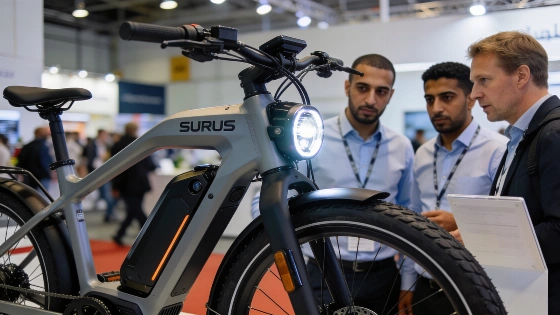
This new direction was visible at the IAA Transportation trade show in Hanover, where Surus Automotive, a Tunisian manufacturer, presented its electric bike. The launch signals Tunisia's intent to claim a place in the fast-changing world of electromobility, where European buyers are looking for alternatives to Chinese suppliers. The recent opening of XPENG's first official showroom in Tunisia, in partnership with XPCARS Tunisia, adds to the country's growing electric vehicle (EV) ecosystem and its appeal to international companies. (XPENG showroom launch)
From component supplier to innovation hub
For years, Tunisia has supplied parts and components to European automotive firms. Now, the country is aiming higher: by focusing on sustainable solutions for electric vehicles, Tunisia wants to become a credible alternative to China for next-generation mobility products. The Tunisian Automotive Partnership Roadshow, set for October 2026, will bring 13 South Korean automotive suppliers to Tunisia, reflecting the country's growing role in global supply chains. This event is coordinated by the Tunisian Automotive Association, FIPA, and the Tunisian-Korean Chamber of Commerce, and is covered by the Tunis Afrique Presse (TAP) news agency.
The Surus Automotive electric bike launch is more than a product debut. Tunisia is signaling to European partners that it can offer not just parts, but also innovation and sustainability in a sector that is changing quickly. The government has taken steps to encourage investment, as shown by a recent official decision from the Prime Minister's office, which outlines measures to improve the investment climate, digitize administrative procedures, and remove restrictive licensing requirements.
Strategic stakes for Tunisia and Europe
As European manufacturers look to diversify their supply chains and reduce reliance on China, Tunisia's move could change the regional landscape in the automotive industry. The country's established manufacturing base, combined with its new focus on electric mobility, offers Europe a possible way to build more resilient and sustainable supply lines. According to a recent industry review, Tunisia now has 140 public EV charging stations, putting it ahead of Ethiopia and Rwanda but behind Kenya in Africa's charging infrastructure-a metric tracked by the UN Economic Commission for Africa (UNECA).
This shift comes as other sectors of Tunisia's economy show renewed activity, including recent growth in the banking sector (reported earlier). The willingness to invest in innovation and sustainability could further strengthen Tunisia's position as a strategic partner for Europe. New foreign investments are also being discussed in the automotive sector, including a possible €3 million project by China's Kunshan Chemitec Automotive Components, as reported by L'Economiste Maghrébin and confirmed by the Ministry of Industry, Mines and Energy.
Tunisia's effort to move from component supplier to innovation hub is a calculated risk that matches the changing priorities of European industry. If the country can deliver on its promise of sustainable electric mobility solutions, it could gain new business and a stronger role in the region's industrial future. The next challenge will be turning trade show prototypes into real market impact-a test that will show whether Tunisia can compete with established players in the electric mobility sector.