A Tétouan beekeeper says hornets destroyed 50 hives, while around 40 cooperatives have reported similar problems. No verified region-wide count of hive losses or economic damage is available.
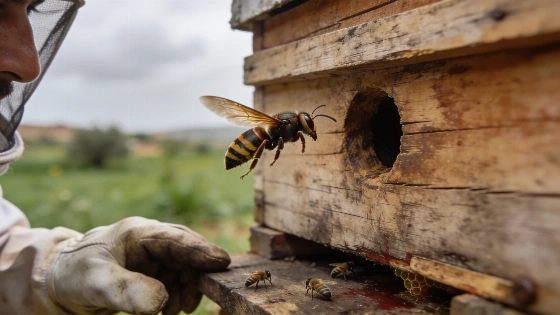
At hive entrances, beekeepers say hornets wait for bees returning to their colonies. In Tétouan, Anas Elwadi, a beekeeper and head of the Nadir cooperative, says attacks have cost him 50 hives. He says around 40 cooperatives in the region have reported similar damage, putting pressure on honey production and beekeeping livelihoods. Those figures are attributed reports, not an independently verified regional count.
Colony losses could also affect agriculture. Bees pollinate crops, but available reporting does not quantify any resulting change in yields or farm income.
Reports of the eastern hornet, Vespa orientalis, in Morocco date to 2023, when beekeepers identified it in Fahs-Anjra province. Later reports placed it in Tangier and Tétouan. Other reports named M'diq and Fnideq. Le360 reported detections at at least six sites between Tétouan and Fnideq, at elevations of 7 to 53 metres above sea level. The observations point to a coastal spread, but they do not establish the species' full range.
Repeated attacks near hive entrances can keep bees inside and stop them from foraging, local beekeepers say. Over time, that disruption can weaken a colony.
The National Union of Professional Beekeepers has called for an urgent response. The Tangier Observatory for the Protection of the Environment and Historical Monuments has urged surveys and mapping to establish the extent of affected areas. Le Matin reported that beekeepers say they have raised concerns with authorities over the past three years. The available material does not confirm a nationwide control programme.
Elwadi says a single hornet colony can produce up to 70 queens, each potentially capable of founding a new nest. He describes nests containing 2,000 to 3,000 individuals, built near apiaries where bees and larvae can provide food. Hornets may also feed on fruit such as grapes and figs, raising a possible concern for fruit growers. These biological and dietary details are reported claims, not a measured estimate of damage in northern Morocco.
Elwadi estimates that a lost hive typically contains more than 10,000 bees. By that estimate, 50 lost hives would represent more than 500,000 bees. That is an illustrative calculation, not a separately verified count. Lost hives also mean damage to beekeeping equipment and lost labour, but the material reviewed contains no independent figure for the economic cost.
Other reported locations include Tangier and Tétouan. Reports also name Fnideq and Ksar-Sghir, as well as Oued Laou and Jebha. Elwadi disputes claims by some environmental associations that the species poses no aggressive risk to people. He describes painful stings and severe swelling. His account is not a clinical assessment; anyone stung who develops severe symptoms should seek medical advice.
Morocco's food-safety authority and national news agency MAP are sources for official updates and any future nationwide figures. The reports available so far do not establish an official count of destroyed hives. They also provide no confirmed scale of economic losses or completed government control measures.
The pressure on cooperative livelihoods intersects with wider local economic questions explored in this analysis of municipal job markets. The evidence here, however, concerns apiary losses and agricultural pollination.