At the opening of Morocco's 12th parliamentary term on October 9, Mohammed VI urged new strategies for water and energy, with food security also on the agenda. He pressed for more private investment and faster regional devolution, and called for a review of migration cooperation with Spain without ending the partnership.
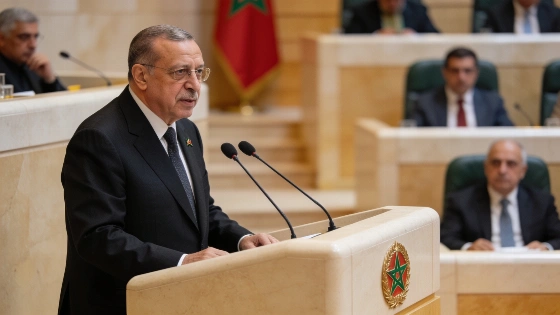
At the first sitting of the first year of the 12th parliamentary term, Mohammed VI addressed MPs on October 9, 2026. Migration cooperation with Spain had reached its limits, he said, putting a review of the partnership among the new legislature's challenges.
The King tied that diplomatic strain to a domestic test: turning economic ambition into investment and jobs. Stronger regional institutions are also part of the agenda. The address announced no Maghreb-wide initiative and no new cross-border agreement. UNECA's regional development work offers a broader frame for debates on competitiveness and resilience, but the commitments in the speech remain Morocco's own policy agenda.
Mohammed VI acknowledged results under the existing approach, then argued that the model had run up against its limits. He blamed obstacles to returning minors on outdated legal provisions and judicial decisions that, in his assessment, no longer reflect current realities. He also pointed to people he said were making unfounded refugee-status claims. Such obstacles, he warned, could encourage criminal networks. Reuters reported that the remarks followed a large migrant crossing at the Ceuta border in July, adding to tensions between Rabat and Madrid.
The King called the partnership with Spain a sovereign and voluntary choice, not one to be shaped by pressure, threats or blackmail. Morocco would present partners with a new strategic document built around co-development and economic competitiveness. Regional stability is another stated aim. The proposal signals a review of the existing model, not a decision to end cooperation. Reporting on Spanish law has also noted that a court ruling bars the automatic return of migrants arriving by sea, limiting immediate repatriation, including for minors.
Morocco's state news agency, MAP, is an official channel for national policy announcements. The King's address set priorities; it did not announce a new bilateral accord. He said migration cooperation had produced results, while calling for a framework that Rabat considers better suited to current conditions.
The domestic programme covers water and energy. Food security is another priority. Mohammed VI also called for work on industrial development and the digital economy, then singled out artificial intelligence. He urged the faster creation of strategic reserves and more secure supply chains for essential goods. These are priorities for investment and resilience, not new project commitments made in the speech.
Businesses, he said, should do more to support investment and employment. He also called for higher exports. Youth policy should connect education and vocational training with entry into the economy.
The digital agenda has an investment counterpart already in view: an earlier report detailed plans for the Nexus AI Factory near Casablanca, with capacity of up to 500MW. The speech announced no new project or investment commitment.
On domestic governance, Mohammed VI said delays in implementing the Charter for advanced regionalisation were no longer acceptable. He called for powers to move to the regions, along with the staff and financial resources needed to exercise them. He also demanded clear coordination arrangements and agreements between central government and regional authorities. The test for decentralisation, then, lies in implementation rather than the formal existence of regional bodies.
The King called the moment exceptional and described an MP's mandate as both a political commitment and a moral contract with citizens. He invoked national identity and the continuity of the monarchy, along with his role as Commander of the Faithful. Pride, he warned, should lead to collective responsibility rather than vanity.