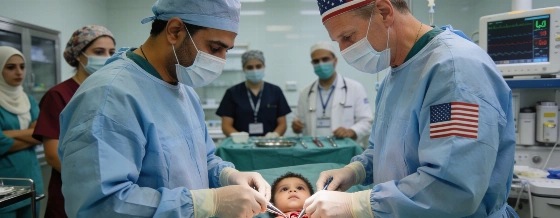
A US medical team, working with Libyan specialists at Tripoli University Hospital, has successfully performed 16 open-heart surgeries and paediatric cardiac catheterizations, advancing efforts to localise advanced cardiac care in Libya.
A joint initiative between the Novick Cardiac Alliance from the United States and Libyan medical teams at Tripoli University Hospital has resulted in 16 successful open-heart surgeries and paediatric cardiac catheterizations over a ten-day period. The collaboration, led by William M Novick and Paul Nemir Jr. of the University of Tennessee Health Science Center's Global Surgical Institute, is part of a broader medical cooperation programme aimed at strengthening Libya's capacity to treat complex paediatric cardiac cases domestically.
According to the Libyan Ministry of Health, the partnership is now in its second consecutive week, with ongoing medical examinations and case evaluations to identify further candidates for surgery. The programme targets a total of 40 operations during the current visit, with both diagnostic and therapeutic procedures being performed. The Ministry highlighted the integrated approach, involving cardiologists, cardiac surgeons, nurses, anaesthesia technicians, laboratory teams, blood banks, and administrators, as key to the programme's success.
Programme Aims to Localise Advanced Cardiac Care
The medical cooperation is part of a twinning initiative designed to reduce Libya's reliance on overseas treatment for paediatric cardiac conditions. By working alongside international specialists, Libyan teams are gaining hands-on experience in advanced surgical techniques and post-operative care, supporting the long-term goal of building sustainable local expertise.
Next Steps and Regional Significance
With 16 operations completed and further cases under evaluation, the initiative is expected to continue over the coming weeks. The Ministry of Health has indicated that the programme will serve as a model for future collaborations, aiming to expand access to specialised care and reduce the need for medical travel abroad. The partnership also underscores the role of international cooperation in strengthening Libya's healthcare system during a period of ongoing institutional challenges.