
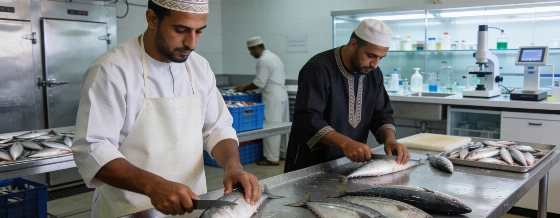
Zliten has inaugurated a new fish market and experimental laboratory, part of the EU's REBUILD programme, aiming to modernise Libya's fisheries sector, strengthen supply chains, and support economic diversification beyond hydrocarbons.
The municipality of Zliten, located 160 km east of Tripoli, has opened a new fish market and an experimental laboratory dedicated to fish preservation and collection. The initiative is part of the European Union's REBUILD programme, which seeks to enhance Libya's fish supply chain and promote economic diversification away from hydrocarbons.
According to the municipality, the project marks a significant step in supporting local fishermen and advancing the fisheries sector in Zliten. The facility is designed to help fishermen meet international standards and improve the quality and traceability of fish products, enabling access to both local and global markets.
EU REBUILD Programme Targets Supply Chain Modernisation
The fish market and laboratory are components of the EU's REBUILD Pilot Action Fishery programme, which aims to strengthen Libya's maritime sector. The project enables conservation, refrigeration, processing, and commercialisation of fish, while introducing a comprehensive traceability system in line with EU regulations. This is expected to facilitate the export of Libyan fish products and improve their competitiveness internationally.
The pilot laboratory and storage facility in Zliten was coordinated by Italy's Friuli-Venezia Giulia region and implemented by the National Institute of Oceanography and Applied Geophysics (OGS). The facility includes two refrigeration rooms, one freezing room, and a processing room, with a daily capacity to handle between 500 kg and 2 tons of fish, all meeting EU quality standards.
Broader Regional Impact and Next Steps
Beyond Zliten, the REBUILD fishery pilot action extends to other Libyan municipalities, including Sirte, Benghazi, Tripoli, and Tobruk, with training and additional projects underway. The initiative is intended to support Libya's efforts to diversify its economy, create new opportunities for local communities, and align the fisheries sector with international best practices.
As the new facility begins operations, stakeholders will be monitoring its impact on local supply chains, export potential, and the broader development of Libya's fisheries sector. The success of the Zliten project could serve as a model for similar initiatives across the country.