
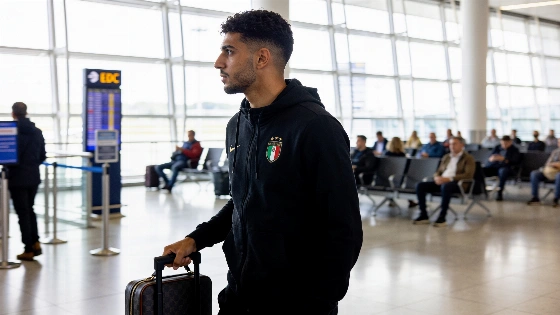
Al-Ittihad has secured Algerian international Anis Hadj Moussa from Feyenoord in a €40 million move, shattering the Dutch club's sales record and highlighting the Gulf's growing pull on North African talent. The deal awaits only a final bank guarantee.
Al-Ittihad's €40 million bid for Anis Hadj Moussa has upended the transfer market, forcing Feyenoord to part with their Algerian star in what will become the most lucrative sale in the Dutch club's history-if the Saudi side delivers the required bank guarantee.
For Hadj Moussa, the decision marks a dramatic pivot. At just 24, he leaves the European spotlight after a breakout Eredivisie season, not for a top-five league as many predicted, but for the Saudi Pro League's deep pockets. The move is not yet official: Feyenoord's management has made clear that no signature will be inked until Al-Ittihad provides a formal financial guarantee, a standard but non-negotiable demand in high-value international deals.
Financial Power Shifts the Market
Hadj Moussa's initial reluctance was no secret. The Algerian winger had set his sights on a European elite club, viewing the Gulf as a distant option. Yet the scale of Al-Ittihad's offer-both in transfer fee and personal terms-left little room for sentiment. Negotiations accelerated rapidly, with both clubs' executives hammering out terms that would see Hadj Moussa become one of the Saudi league's most expensive imports. The only obstacle: a single piece of paperwork. Feyenoord's insistence on a bank guarantee is more than a formality; it is a safeguard against the volatility that sometimes shadows Gulf transfers.
Interest from the region was not new. As early as June, other Saudi Pro League clubs had already approached Feyenoord about the Algerian international, confirming that Gulf scouts had been tracking his progress for months. The financial muscle of Saudi clubs is now reshaping the career trajectories of North African players, who increasingly weigh immediate financial security against the prestige of European competition.
Consequences for Player and Club
For Feyenoord, the deal is transformative. The €40 million fee, including bonuses, dwarfs any previous outgoing transfer and injects significant capital into the club's operations. For Hadj Moussa, the move is a calculated gamble: he trades the visibility and competitive rigor of Europe for the financial rewards of the Saudi league, a path already taken by several Algerian internationals before him.
Yet the transfer is not without risk. Until Al-Ittihad's financial guarantee is delivered, Feyenoord will not release the player. Mohamed Dahmane, Hadj Moussa's representative, confirmed that the agreement is in place but hinges entirely on this final administrative hurdle. If the Saudis act swiftly, the deal could be finalized within days.
North African football's export dynamics are shifting. As seen in recent trade patterns, Gulf capital is increasingly dictating the movement of talent and resources across the region, often outbidding European rivals for top prospects.
Hadj Moussa's transfer is a clear signal: for North African players and their clubs, the Gulf's financial gravity is now impossible to ignore. The era when European leagues held an uncontested monopoly on ambition is over. Feyenoord's hardline stance on financial guarantees is a reminder that, in this new market, only those who can deliver both cash and credibility will shape the next generation of regional stars.