

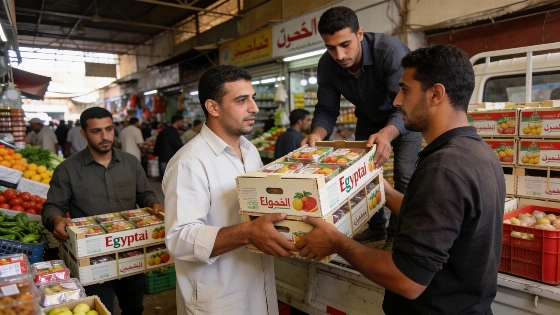
Algeria has become the eighth largest global importer of Egyptian food products, with imports rising 29% to $159 million between January and July 2026, reflecting deepening trade ties and shifting regional market dynamics.
Algeria has significantly increased its imports of Egyptian food products, moving up to become the eighth largest importer worldwide in the first seven months of 2026. According to a statement from the State Information Service (SIS) of Egypt, Algeria's purchases reached $159 million between January and July, marking a 29% increase compared to the same period in 2025.
The SIS report highlights that Egypt exported a total of $4.47 billion in food products globally during this period. Around 60% of these exports were concentrated in just fifteen markets, with Algeria among the leading destinations. The Algerian market alone accounted for nearly 4% of Egypt's total food exports.
Key Drivers of Growth in Algerian Imports
While the SIS did not specify the exact breakdown of products imported by Algeria, Egyptian media outlet Ahram Online noted that the surge was primarily driven by higher exports of edible oils, molasses, and frozen strawberries. These categories have played a central role in boosting trade volumes between the two countries.
In the broader ranking, Saudi Arabia remained Egypt's top food export market with $363 million in imports, followed by the United States at $290 million and Libya at $196 million. Algeria's $159 million in imports placed it just behind Sudan, Spain, the Netherlands, and Jordan, rounding out the top eight markets for Egyptian food exports.
Regional Trade Patterns and Market Implications
Beyond the leading eight, other Arab markets such as Iraq, Palestine, and the United Arab Emirates also featured among Egypt's top fifteen food export destinations. Notably, neither Tunisia nor Morocco appeared in this group, indicating their import volumes were below the $99 million threshold set by Germany, the last country listed by the Egyptian Food Export Council (FEC).
Libya continues to be the largest Maghreb client for Egyptian food products, maintaining its third-place position with $196 million in imports. The absence of Tunisia and Morocco from the top fifteen underscores the shifting dynamics of regional trade, with Algeria and Libya now representing the Maghreb's principal importers of Egyptian food goods.
This trend in Algerian imports reflects broader changes in North African trade flows, as countries in the region adjust sourcing strategies and respond to evolving market conditions. For context on how shifts in import patterns can impact local markets, see this analysis of Chinese car imports and price competition in Algeria.
What to Watch Next
Market observers will be monitoring whether Algeria's demand for Egyptian food products continues to grow in the coming months, and how this may influence regional supply chains and competition among Maghreb importers. The evolving trade relationship could also have implications for food security strategies and bilateral economic ties between Algeria and Egypt.