A joint mission by the African Development Bank and Islamic Development Bank assessed 1 086 km of southern route sections, examining whether the planned railway could lower freight costs and improve Algeria's trade links with Niger and West Africa.
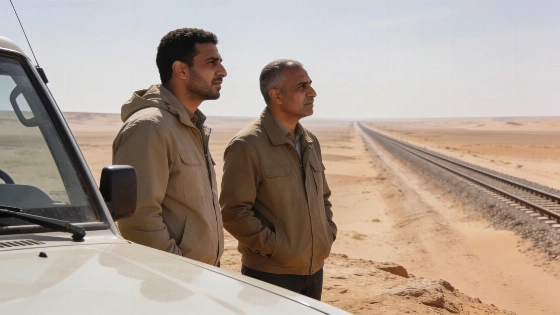
A nine-member team travelled along 1 086 kilometres of the El Meniaa-In Salah-Tamanrasset sections during a mission held from September 21 to October 1, 2026. The African Development Bank (AfDB) Country Manager for Algeria, Abdoulkader Dileita, and Islamic Development Bank (IsDB) Regional Hub for North Africa Director Ahmed Ag Aboubacrine led the work. The banks described the mission as part of their dialogue with Algeria to support expansion of the national railway network.
The two banks assessed the proposed Algiers-Tamanrasset corridor with Algerian authorities. Consultations included the Ministry of Public Works and Basic Infrastructure and the National Agency for Studies and Monitoring of Railway Investment Implementation (ANESRIF). Discussions covered the corridor's potential role in linking production areas with ports and markets, along with environmental sustainability and regional integration. The mission continued AfDB's work on the Laghouat-Ghardaia-El Meniaa axis.
Freight costs and economic activity
Better rail connections could reduce the cost of moving agricultural products and minerals, with manufactured goods also in view. The AfDB and IsDB have framed the corridor as a potential driver of economic development in Algeria's Deep South, with logistics and production activity developing along the route.
The corridor could support agriculture and mining across the Algerian Sahara, which covers more than 2 million square kilometres. Industrial and logistics activity could also develop along the route.
A separate southern rail contract was covered in an earlier rail report. That project links Ghardaia with El-Meniaa, while the current assessment examines the route farther south through In Salah to Tamanrasset. AfDB approved $878.09 million in July 2026 for the second phase of the wider 495-kilometre Laghouat-Ghardaia-El Meniaa project; the Ghardaia-El Meniaa stage covers 230 kilometres. This funding concerns the northern part of the southern rail axis, distinct from the planned extension to Tamanrasset. The AfDB mission report places the corridor within Algeria's broader rail expansion plans.
Regional links remain a project objective
The proposed corridor is expected to connect with existing and planned African transport networks. The project could improve trade with the Sahel and support regional value chains. It also aligns with African Continental Free Trade Area objectives to expand intra-African commerce.
Development along the route could create businesses and jobs for young people. The mission also assessed environmental sustainability and resilience as it travelled more than 2 000 kilometres across 10 provinces to examine local economic and territorial conditions.
Expansion target sets the national context
Algeria operates Africa's second-largest railway network, at about 6 000 kilometres. The government aims to extend it to 15 000 kilometres by 2030 as part of plans to modernise infrastructure and diversify the economy. Those plans also seek to improve regional connectivity. The Tamanrasset corridor is one part of that wider expansion programme.
On October 18, President Abdelmadjid Tebboune ordered the immediate launch of the Laghouat-El Meniaa-In Salah-Tamanrasset railway project, with the official announcement specifying that work should begin from Tamanrasset. The following day, contractors were invited to bid for railway works on a 341-kilometre southern section of the El Meniaa-In Salah-Tamanrasset corridor. Radio Algérienne reported the presidential decision as the immediate launch of the line.