
President Abdelmadjid Tebboune has ordered the conversion of a southern military base into a high-security prison for drug traffickers and the creation of a dedicated anti-narcotics agency, signaling a new phase in Algeria's fight against organized crime.
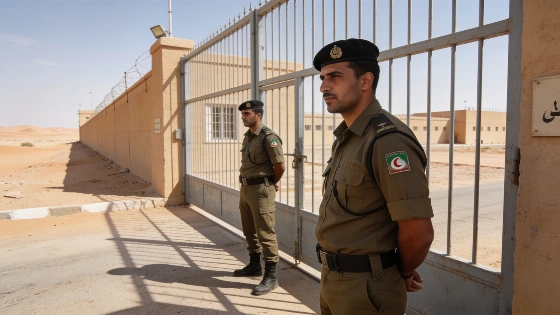
Algeria's security doctrine has taken a sharp turn: President Abdelmadjid Tebboune has authorized the transformation of a remote military barracks in Tanezrouft, deep in the Grand Sud, into a high-security prison designed exclusively for the country's most powerful drug traffickers. This move, announced after a meeting of the Conseil supérieur de sécurité, is intended to sever the operational links of criminal networks by physically isolating their leadership far from urban centers and traditional power bases.
At the same time, Tebboune's administration is establishing a new specialized agency tasked solely with combating narcotics trafficking. Modeled on international precedents such as the United States' dedicated anti-drug bodies, this agency will centralize intelligence, enforcement, and coordination-an explicit admission that Algeria's existing security architecture has struggled to contain the scale and sophistication of the drug trade.
Strategic Isolation and Institutional Overhaul
The decision to repurpose a military facility in the Tanezrouft region is not merely symbolic. By relocating high-value detainees to the country's southernmost reaches, authorities aim to disrupt the command structures of major trafficking syndicates. The prison's location-far from Algeria's densely populated north-underscores the government's intent to prevent communication, collusion, and escape attempts that have plagued previous efforts to contain organized crime.
Meanwhile, the creation of a dedicated anti-narcotics agency marks a structural shift. Algeria is moving away from fragmented, multi-agency responses toward a single, specialized institution with a clear mandate. This mirrors reforms seen in other sectors, such as the recent overhaul of public transport financing reported earlier, where centralization has been used to accelerate results and accountability.
Escalating Penalties and Expanding Security Mandate
The security council's communiqué did not stop at drug policy. In a stark escalation, the government called for the effective application of the death penalty for those found responsible for major arson attacks-an explicit response to a wave of devastating wildfires. Investigations into these incidents are being led jointly by the Gendarmerie nationale and Sûreté nationale, with results expected to be announced at a forthcoming joint session. The message is clear: the state is prepared to use its harshest legal tools to deter crimes it deems existential threats.
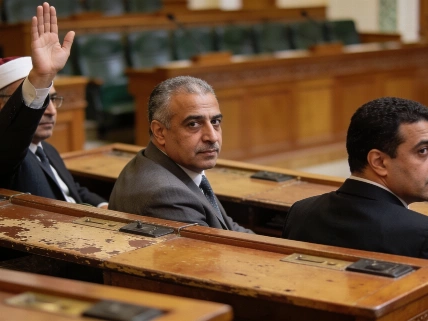
Beyond domestic enforcement, the council also reviewed Algeria's broader security environment, including developments in neighboring states. This regional vigilance reflects the government's recognition that cross-border criminal networks and instability in the Sahel and Maghreb directly impact Algeria's internal security calculus.
By combining the physical isolation of criminal leaders, the creation of a specialized anti-drug agency, and the threat of capital punishment for arsonists, Tebboune's government is signaling a willingness to escalate both institutional and punitive measures. The approach is uncompromising: Algeria is betting that centralization, deterrence, and operational disruption will succeed where piecemeal reforms have failed. Whether this marks a genuine turning point or simply a new phase in the country's long struggle with organized crime will depend on the agency's effectiveness and the state's ability to sustain political will beyond the initial announcement. For now, the message to traffickers and criminal networks is unmistakable: the era of fragmented enforcement is over, and the state is prepared to redraw the map of its security apparatus to reassert control.