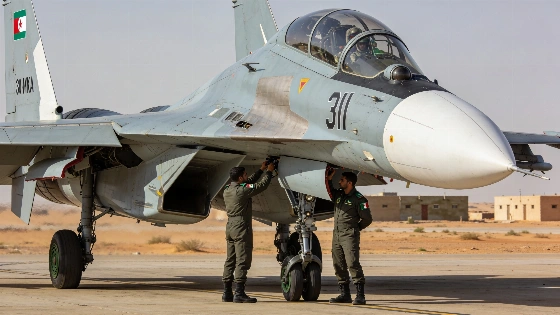
Algeria has escalated its military involvement in Niger, deploying fighter jets and helicopters to support the junta after a failed coup attempt. The move signals a shift in Algiers' Sahel strategy and raises the stakes for regional security and energy infrastructure.
Algeria's air force roared into Niger's skies just hours after a mutiny threatened to topple the military junta in Niamey, marking the most assertive intervention by Algiers in the Sahel's spiraling instability. Four Sukhoi Su-30MKA fighter jets, backed by an Il-78 tanker and Il-76 transport, landed at Niger's request, a clear signal that Algeria is no longer content to watch chaos unfold on its southern border.
The failed coup attempt on 29-30 August targeted the heart of Niger's power: the presidential palace, Diori Hamani International Airport, and the critical Base 101, which hosts the Sahel States Alliance command and the last Western military presence in the country. The Nigerien Ministry of Defence quickly declared the mutiny crushed, but the episode exposed just how fragile the junta's grip remains.
Algeria's new doctrine in the Sahel
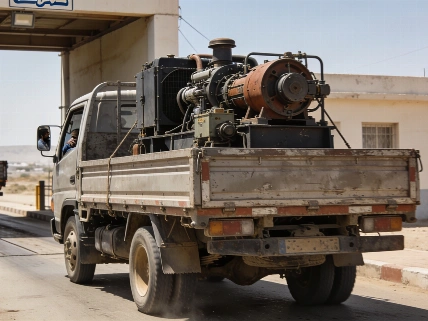
For decades, Algeria clung to a doctrine of non-alignment, projecting influence through diplomacy rather than force. That posture is now being recalibrated. The dispatch of advanced Russian-made aircraft and, earlier in August, the donation of Mi-24 SuperHind attack helicopters and Mi-171 transports to Niger's junta, marks a decisive shift. Algiers is moving from "influence without interference" to direct military engagement when its interests are threatened.
Analysts like Dario Cristiani of the Atlantic Council note that Algeria's security calculus has changed. The spread of Al-Qaeda in the Islamic Maghreb, persistent migration flows, and the collapse of state authority across Mali, Burkina Faso, and Niger have forced Algiers to adapt. The 950-kilometre border with Niger is now seen as a frontline, not a buffer.
Diplomatic overtures have not been abandoned-Algeria recently reopened airspace to Mali after a year-long freeze-but the balance has tipped toward hard power. The government's support for Niger's junta is less about ideological alignment and more about preventing a power vacuum that could spill violence and instability northward.
Energy corridors and regional rivalries
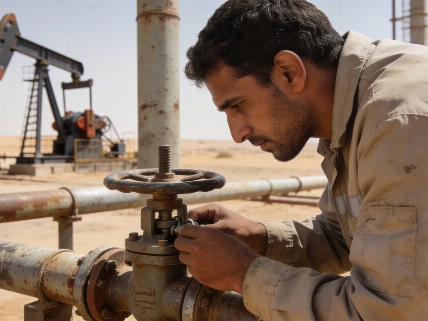
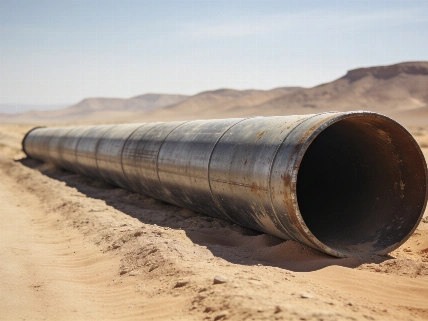
Algeria's intervention is not just about border security. The Trans-Saharan Gas Pipeline, a 4,000-kilometre project designed to move 30 billion cubic metres of gas from Nigeria through Niger to Algeria, is a strategic asset at stake. Any further destabilisation in Niger threatens this pipeline, which competes directly with Morocco's African Atlantic Gas Pipeline project.
The Sahel has become a chessboard for regional power plays. Morocco's own initiatives in West Africa have spurred Algeria to act more assertively, with both countries vying for influence over energy routes and political alignments. The presence of Russia's Africa Corps-formerly Wagner Group-adds another layer of complexity, as Moscow seeks to entrench its own interests in the region's security architecture.
For Niger's junta, the irony is stark. Having seized power on a platform of sovereignty and anti-foreign intervention, it now relies on external military support from both Russia and Algeria to survive. As Beatrice Bianchi of the Strategic Centre for Sahel-Sahara Security observes, the government that once rejected French involvement is now actively soliciting outside help to suppress internal threats.
What to watch next
The immediate crisis in Niamey may have been contained, but the underlying drivers of instability remain. Algeria's willingness to project force southward is a watershed moment for its foreign policy, with implications for the entire Maghreb-Sahel corridor. The fate of the Trans-Saharan Gas Pipeline, the balance of power among Sahelian juntas, and the evolving rivalry with Morocco will all hinge on whether Algiers can translate military moves into lasting security.
Algeria's intervention exposes the limits of sovereignty rhetoric in a region where state collapse and external meddling are now the norm. The real test will be whether this new assertiveness delivers stability-or simply drags North Africa deeper into the Sahel's vortex of coups, insurgency, and great-power competition.