A reported convoy reached Arlit after Algeria approved a troop mission in Niger, tying a new security role to oil sites and the proposed Trans-Saharan Gas Pipeline as Algiers competes with Morocco for Sahel influence.
A military convoy reportedly reached Arlit in northwestern Niger around 30 October, while a separate deployment site lies at Madama near the Libyan border. The two locations are about 740 kilometres apart. Arlit is a major uranium-mining town, and Algeria and Niger share a 951-kilometre border.
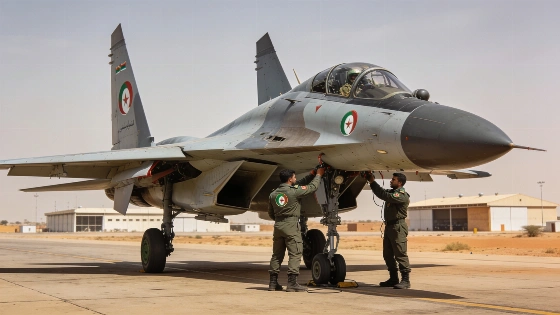
The two Algerian parliamentary chambers unanimously approved the deployment of People's National Army units to Niger on 25 October 2026, after President Abdelmadjid Tebboune notified parliament of the proposed mission. The decision followed a military-cooperation protocol signed in Algiers on 21 October by Algerian army chief General Saïd Chanegriha and Nigerien Defence Minister General Salifou Mody. The deployment marks Algeria's first acknowledged foreign ground mission since its participation in the 1973 Arab-Israeli war.
Energy infrastructure at the centre of the mission
Algiers says the troops are there to protect shared energy and economic interests, including oil investments in northern Niger. A statement carried by Algeria Press Service and reproduced in reporting described the mission as intended "to protect the common energy and economic interests" of the two countries. Algeria has held investments in the area since 2022. The available reporting does not explain why the deployment came now. The mission also puts security around a proposed regional gas route.
The Trans-Saharan Gas Pipeline (TSGP) is intended to carry gas from Nigeria through Niger to Algeria. The three countries signed a memorandum of understanding in 2022, followed by an agreement to accelerate construction in 2025. The Nigerien route is expected to run along the Zinder-Agadez-Arlit axis, the same broad corridor as the reported convoy movement. Algeria has begun construction; Niger is expected to start in early 2027. Insurgent violence in Niger remains a threat to the project.
By 31 October, reports said Algerian soldiers had escorted approximately 60 fuel tankers toward Agadez, with Nigerien troops joining the convoy at the border. The mission's troop numbers and duration, along with its rules of engagement, have not been publicly released. The European Union sought clarification on the operation's legal basis and objective after reports of Algerian forces entering Niger.
Nigeria's Dangote refinery began production in January 2024 and is Africa's largest refinery. Its opening adds to the region's energy infrastructure as the TSGP plans move forward. Algeria has also become one of Europe's largest gas suppliers after Russia's invasion of Ukraine, while the source says Nigeria displaced Qatar as the third-largest supplier during the Iran War.
Morocco rivalry shapes Algiers's calculations
Algeria's intervention comes amid a worsening dispute with Morocco. Rabat normalised relations with Israel under the Abraham Accords in 2020, in exchange for US recognition of Moroccan sovereignty over Western Sahara. Algeria supports Western Sahara's independence and views Morocco's ties with Israel and the UAE as a threat to its own sovereignty.
Israel joined military exercises in Morocco in 2023 and again in 2025. The countries agreed to deepen military cooperation this year. Algeria severed diplomatic ties with Morocco in August 2021, accusing Rabat of supporting Kabyle separatism. In September 2026, Algiers cut relations with the UAE and made a similar accusation against Abu Dhabi.
Rabat has also promoted its Atlantic Initiative, which offers landlocked Sahel states access to Moroccan ports. The proposal connects the regional rivalry to trade access as well as security. A recent ports report examined Morocco's Atlantic ambitions and their strategic context.
Algeria's military budget rose from $9 billion in 2022 to $25 billion in 2025. A deployment in Niger also gives its forces experience in desert terrain similar to the Algeria-Morocco border and Western Sahara, though the source does not establish that this was the mission's stated purpose.
From diplomatic distance to Sahel cooperation
Algeria has generally avoided foreign military involvement since its 1992-2002 civil war, despite opposing NATO's intervention in Libya and favouring diplomacy during the Mali conflict. In 2012, it negotiated a ceasefire after the National Movement for the Liberation of Azawad declared independence; the effort led to the 2015 Algiers Accords.
Relations with the Alliance of Sahel States (AES) were strained after coups in the region. Niger and Mali are members; Burkina Faso is the third. Algeria opposed the coups and warned against using force to resolve political disputes. Mali terminated the Algiers Accords in January 2024, and diplomatic ties worsened after a drone was shot down near the border in March 2025. Algeria said the aircraft had entered its territory; Mali said it remained on the Malian side.
The countries began restoring ties in 2026. Nigerien President Abdourahamane Tiani met Algerian President Abdelmadjid Tebboune in Algiers in February, and the two governments agreed on border security cooperation and infrastructure development. Algeria and Mali announced restored relations in July. In August, Algeria donated four military helicopters to Niger and sent fighter jets to stop a coup attempt in Niamey.
Russia also pressed for reconciliation. Le Monde reported that President Vladimir Putin and Foreign Minister Sergei Lavrov encouraged AES governments to restore relations with Algeria. The International Monetary Fund reported improved security in Burkina Faso since Ibrahim Traoré took power. Separate reporting by Africa Intelligence said Amazigh rebels approached the UAE in October seeking finance and weapons in exchange for gold.
Algeria's deployment extends that renewed cooperation into a ground mission. Reports place the convoy in Arlit and identify Madama as another deployment site; the reported movements include an escorted convoy of approximately 60 fuel tankers bound for Agadez. Niger is expected to begin TSGP construction in early 2027.