Algeria raised its natural gas output by 4.2% in the first half of 2026, reaching 54.01 billion m³, the highest level in three years, as it strengthened its role as a basic supplier to Europe amid ongoing energy market pressures.
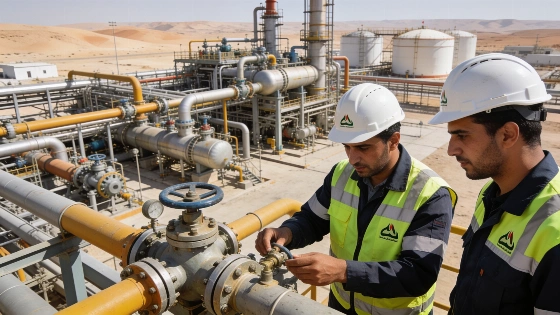
Algeria produced 54.01 billion cubic metres (m³) of natural gas in the first half of 2026, its highest level in three years and 4.2% more than the 51.81 billion m³ recorded in the same period of 2025. The Energy Research Unit (Attaqa) calculated the figures using data from the Joint Organisations Data Initiative (JODI). Output kept rising later in the year: production from January to August reached 71.31 billion m³, up from 68.55 billion m³ a year earlier. August output was 8.688 billion m³, equivalent to an average of about 9.90 billion cubic feet per day.
The increase extends an upward trend that began in 2022, when output stood at 49.23 billion m³. Algeria is also pursuing a reported €64 billion investment programme covering hydrocarbon production and refining, with petrochemicals also included. Projects were scheduled to begin coming on stream progressively from July 2026, with the stated aims of reducing imports and creating further export potential. The investment plan provides context for the expansion, but does not establish how much of the first-half increase came from new projects rather than existing fields.
Domestic Demand and Energy Transition
Algeria’s domestic gas consumption climbed 6.3% year on year to 28.49 billion m³ in the first half of 2026, with increased demand from electricity generation identified as a basic driver. Higher domestic use puts pressure on the supply available for export, but production and consumption cannot be treated as a simple balance against exports: statistical coverage may differ, while stocks and flaring also affect the totals, along with losses. The consumption figure is so not a direct measure of gas displaced from exports.
Solar power is relevant to Algeria’s effort to manage rising domestic demand and preserve export capacity. The country’s gas-export system also relies on pipeline deliveries and liquefied natural gas (LNG) shipped by tanker, so export trends vary by route and destination.
Exports Rise Amid Geopolitical Tensions
Total gas exports, including pipeline deliveries and LNG shipments, rose 2.4% to 23.97 billion m³ in the first half of 2026, from 23.40 billion m³ a year earlier. Pipeline exports in June reached 3.06 billion m³, compared with 2.95 billion m³ in June 2025. These aggregate figures differ from LNG-only deliveries: in the third quarter, Algeria shipped a reported 890,000 tonnes of LNG to the European Union, 45% less than the approximately 1.40 million tonnes recorded in the same quarter of 2025. Tanker shipments can fall even as total exports grow, if pipeline deliveries offset part of the decline.
Spain and Italy are basic European destinations for Algerian pipeline gas. Spain’s grid operator, Enagás, was cited as showing that Algeria supplied nearly 35% of Spain’s gas in the 12 months to July 2026, mostly via the Medgaz pipeline. Secondary reporting attributed to the Gas Exporting Countries Forum said Algerian pipeline deliveries rose by 13% to Spain and 5% to Italy from January to July. Separate reporting for January to September put the increases at 12% to Spain and 3% to Italy, while EU pipeline imports overall were reported to have risen 3.8% to 110 billion m³. These figures cover different periods and should be read accordingly.
This export momentum comes as other North African countries also review their sectoral performance. Mauritania, for example, recently conducted a mid-year assessment of its health sector in Assaba, highlighting a broader regional focus on strategic resource management.
Strategic Ambitions and Outlook
Under President Abdelmadjid Tebboune, Algeria is reaffirming its commitment to being a dependable energy partner. The government has set an ambitious target to double natural gas exports and reach the symbolic threshold of 100 billion m³, while maintaining strict adherence to contractual obligations with international partners. Higher production, rising domestic demand and investment in the hydrocarbon sector will shape how much gas Algeria can make available for export as it seeks to consolidate its position in the Euro-Mediterranean energy system.