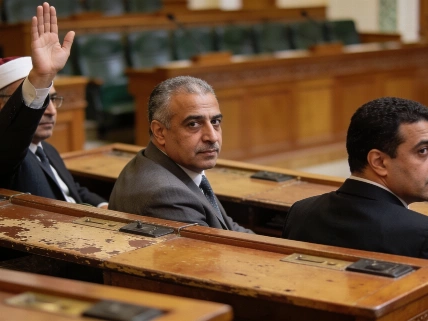

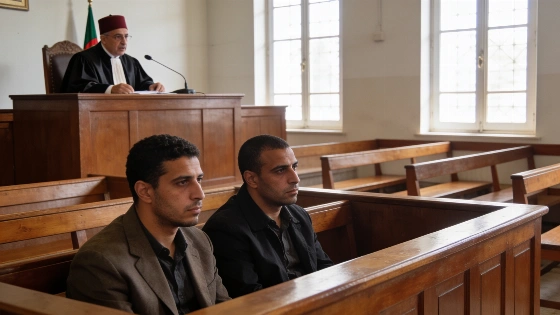
Algerian courts have handed down prison sentences of up to seven years and heavy fines to members of a network that exploited the €750 tourist currency allowance, exposing systemic abuse that drains public finances and fuels the black market.
Seven years behind bars and a half-million dinar fine: that is the price Algeria's judiciary has set for masterminding the country's most lucrative tourist currency scam. The Sidi M'hamed economic crimes court has delivered its harshest verdict yet against a network that siphoned millions from the state by gaming the €750 tourist allowance-an anti-corruption crackdown that signals a new phase in Algeria's battle with currency trafficking.
At the heart of the operation was a simple but devastatingly effective scheme. Fraudsters staged brief, legal crossings into Tunisia, collecting the required passport stamps, only to slip back into Algeria within hours through unsupervised border points. The seven-day minimum stay, a legal prerequisite for accessing the official foreign currency rate, was never observed. Instead, these 'phantom tourists' recycled their documents to claim fresh allowances, feeding hard currency straight into the parallel market for a hefty profit.
Sentences Reflect Scale and Sophistication of Fraud
The court's decisions spanned three separate cases, each exposing new layers of complicity. In the first, the ringleader (F.A) received the maximum penalty: seven years in prison and a 500,000 dinar fine. His chief collaborator (K.H) was sentenced to five years and the same financial penalty. Two more defendants were handed three-year terms and 100,000 dinar fines, while two others received one year and 200,000 dinars. Three suspects walked free, acquitted of all charges.
Subsequent cases revealed the breadth of the network. In one, the main defendant (J.A) was sentenced to five years and a 500,000 dinar fine, with five accomplices each receiving a year in prison and 50,000 dinar fines. The largest case involved 22 accused: three received five-year sentences, two were acquitted, and the remainder were given one-year terms. The court's approach was methodical-penalties were calibrated to the severity of each defendant's role, distinguishing between legal crossings and clandestine returns.
Currency Trafficking: A Blow to Algeria's Public Finances
Prosecutors did not mince words, describing the scam as a hemorrhage for the national treasury. The charges-criminal conspiracy, illegal border crossings, and violations of capital movement laws-underscore the gravity of the threat. Investigators uncovered a menu of services: for 20,000 dinars, intermediaries would arrange for passports to be stamped and returned, simulating a compliant trip. Some defendants even used their own vehicles to shuttle clients to the border, where the hard currency would be laundered into the black market.
Most of those charged confessed, admitting to early returns or paying for fraudulent documentation. Others held out, denying involvement until the end. The authorities, however, have made clear that the scale of the abuse is national, not local. The Bank of Algeria's decision to raise the tourist allowance to €750-a long-awaited move for ordinary travelers-has instead become a windfall for organized traffickers, forcing the state to choose between facilitating legitimate travel and plugging the leaks exploited by currency networks.
Systemic Loopholes and the State's Response
This crackdown is not an isolated event. It follows a pattern of tough penalties in high-profile economic crimes, including the recent import license scandal. The judiciary's willingness to impose severe sentences, as seen in this case and in other sectors such as transport-where, as reported earlier, even traffic violations now carry steep fines-signals a broader shift toward deterrence and institutional discipline.
Yet the underlying vulnerabilities remain. The tourist allowance, designed to support Algerians traveling abroad, has become a structural weakness in the country's currency regime. As long as the official rate diverges sharply from the black market, and border controls remain porous, the incentive for fraud will persist. The state's challenge is to reform the system without penalizing genuine travelers or fueling further distortions in the currency market.
Algeria's latest wave of convictions exposes not just the ingenuity of currency traffickers, but the fragility of regulatory frameworks meant to serve the public good. The judiciary's hard line may deter some, but unless the government addresses the root causes-exchange rate gaps, administrative loopholes, and weak border enforcement-the cycle will repeat. The real test is whether Algeria can modernize its currency controls and border management before the next network finds a new way in.