
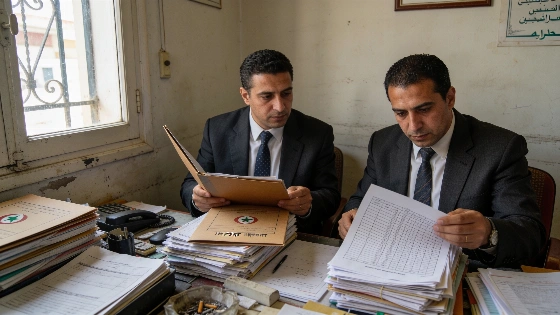
Algeria's Ministry of Commerce has opened a sweeping investigation after thousands of small firms filed import requests worth over $130 billion, raising red flags over possible fraud and regulatory evasion in the country's trade system.
Algeria's Ministry of Commerce has triggered a high-stakes investigation after uncovering a surge of import requests from thousands of micro-enterprises-some with no employees-seeking to bring in goods worth more than $130 billion. The scale and mismatch between declared workforce and requested import volumes have set off alarms at the highest levels of government.
At the heart of the probe are 3,961 economic operators, many of whom declared between zero and five employees, yet collectively submitted import programs for the second half of 2026 that dwarf the country's typical trade flows. The most glaring cases include 149 entities with no staff at all, demanding $484.58 million in imports, and 851 firms with just two employees seeking a staggering $76.88 billion.
Data Patterns Expose Systemic Gaps
The Ministry's digital import platform, which leverages artificial intelligence to cross-check filings, flagged not only the sheer size of the requests but also suspicious patterns in workforce declarations. Authorities observed that some companies reported employees to the CNAS only during the windows for submitting import programs, then reverted to zero staff in off-periods. This timing, coinciding precisely with regulatory deadlines, suggests deliberate manipulation to meet compliance thresholds or mask the true scale of operations.
Such anomalies have prompted the Ministry to coordinate with other government sectors for a forensic review of both current and past import activities. Investigators will scrutinize the nature of imported raw materials, production inputs, and equipment, comparing them against each firm's declared business activity and real production capacity. The goal: to determine whether these import programs reflect genuine economic needs or are vehicles for fraud, capital flight, or other illicit practices.
Regulatory Response and Sector Impact
Officials have reiterated that even forecasted import programs must remain anchored in economic reality. The Ministry warns that disconnecting declared import values from actual business activity-especially among micro-enterprises-undermines the integrity of Algeria's trade system and exposes the country to financial and reputational risk.
This crackdown comes as Algeria's import landscape is already under pressure from shifting regional trade dynamics. As reported earlier, Algeria's appetite for foreign goods has been expanding, but the current revelations suggest that not all of this demand is legitimate or sustainable.
The Ministry's investigation will not be limited to the second half of 2026. Authorities plan to review import operations from previous years, seeking patterns of abuse or regulatory evasion that may have gone undetected. Firms found to have manipulated workforce declarations or submitted inflated import requests face potential sanctions under existing trade and compliance laws.
Editorial Analysis: A System Under Strain
What emerges is a portrait of a regulatory system struggling to keep pace with creative circumvention by small operators. The deployment of AI-driven oversight is a step forward, but the sheer volume of suspect activity points to deeper vulnerabilities in Algeria's trade controls. Unless the Ministry's investigation leads to real enforcement and systemic reform, the country risks seeing its import regime become a playground for opportunists-at the expense of legitimate business and national economic stability.