Algeria says its parliament-approved deployment in Niger was requested by Niamey and rests on a bilateral pact. The EU is seeking details while Algerian figures challenge Brussels' authority to demand them.
The January 2013 attack on the Tiguentourine gas facility in In Amenas showed how threats crossing Algeria's borders could reach its interior. Military historian Tewfik Hamel says that history informs Algeria's view of security in neighbouring states.
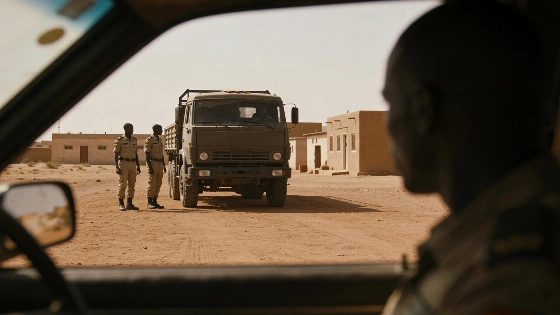
Algeria's two parliamentary chambers unanimously approved the deployment of People's National Army units in Niger on 25 October 2026, following a request from Nigerien authorities and under a bilateral military-cooperation framework. The vote followed a military protocol signed on 21 October by Algerian army chief of staff General Saïd Chanegriha and Nigerien Defence Minister General Salifou Mody. President Abdelmadjid Tebboune authorized the deployment on 26 October.
The authorization was reported under Article 91 of Algeria's 2020 Constitution, which requires parliamentary approval to send national army units abroad. Algeria has described the mission as a way to protect shared energy and economic interests. Senator Belkacem Boulghiti said the troops were not being sent to wage war, but to secure economic infrastructure. The decision was described as Algeria's first deployment of military forces outside its borders since 1973, Quwa reported.
The EU says it is monitoring the deployment and has asked what it covers, what it aims to achieve and what legal basis it rests on. In early November, European Commission foreign-affairs spokesperson Anouar El Anouni said the bloc wanted clarification on the operation's legal grounds and objective. The request was not an EU approval procedure and did not amount to a decision to block the bilateral deployment.
For Algerian commentators, the dispute is about who has standing to question a decision made between two sovereign states. They argue the agreement requires neither EU approval nor reporting. Algeria and Niger share a 951-kilometre border, placing the security of their neighbouring regions at the centre of the debate.
Brussels' role challenged in Algiers
Former Algerian ambassador Abdelaziz Rahabi challenged the EU's demand in a Facebook post titled "Deployment of Forces in Niger: On What Grounds Is Europe Demanding Clarifications?" He questioned why Brussels expected explanations about an announced agreement whose terms concern Algeria and Niger.
"Europe is addressing us as though we were bound by a conventional commitment to it on these issues, or as though it represented a military organisation in charge of the Sahel," Rahabi wrote. He argued that the EU's wording implied Algeria should consult Brussels before acting or explain itself afterward. Rahabi also warned: "Otherwise, this could expose Europe itself to genuine demands for explanations from Algiers."
Algeria's push for wider bilateral ties has also featured in its outreach to Uganda, described in earlier reporting. In the Niger case, former parliamentarian Lakhdar Rezzag Baara cast the deployment as part of a shift toward more direct engagement in the Sahel, arguing that Algeria did not need European permission to act within its geographical sphere.
Claims of pressure remain unverified
Baara cited a Chad Tribune report based on sources it described as confidential. The report alleged that France and the United Arab Emirates were seeking support in European circles for sanctions against Algeria and Niger over their military and economic agreements. It also named Israel and alleged a role for French President Emmanuel Macron. The claims have not been independently verified.
Hamel's analysis in Echorouk, published as "Algeria's Defence Doctrine: The Gradual Shift from Territorial Protection to Neighbourhood Security", places the deployment within a longer debate about cross-border threats. He cites the Libya war and the crisis in northern Mali as developments that blurred the line between domestic security and regional events. Smuggling routes and armed-group networks, he argues, can cross several borders before their effects reach Algeria.
Hamel points to President Abdelmadjid Tebboune's remarks on Libya as evidence that Algeria was willing to deter developments it considered dangerous. In January 2020, Tebboune called the prospect of Tripoli falling to forces loyal to Khalifa Haftar a red line. In June 2021, he said Algeria was prepared to intervene in one way or another to prevent that outcome. No operational plan for intervention in Libya was publicly announced or implemented.
Hamel distinguishes those statements from Algeria's approach to Mali. Tebboune referred to the constitutional possibility of intervention while arguing that a military solution was not the answer. He advocated a restored Malian state presence and stronger institutions.