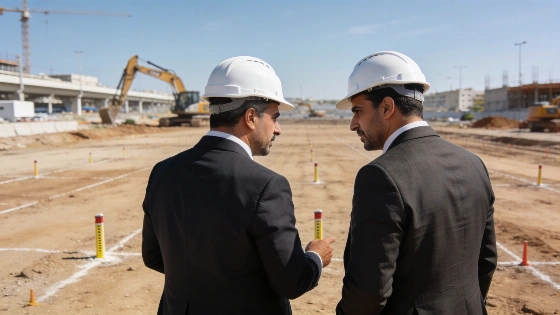
Algeria's government has set a goal of enabling 20,000 investment projects by 2029, anchored by a nationwide survey of available economic land and a five-pillar strategy to unlock and develop basic sites.
The Algerian government has announced a plan to help 20,000 investment projects nationwide by 2029, centred on a survey of available economic land. The strategy aims to turn underused sites into productive assets by clarifying their status and tackling allocation barriers, while linking them to impressive infrastructure.
Prime Minister Sifi Ghrieb chaired a videoconference with regional governors on 17 August to discuss the investment agenda and preparations for the 2026-2027 academic year. Held in line with directives from President Abdelmadjid Tebboune, the meeting also covered school transport and canteen services. Several ministers attended.
Five-pillar strategy to unlock economic land
The roadmap rests on five pillars: completing a national inventory of economic land and digitising land governance; resolving legal and administrative barriers; upgrading sites and connecting them to infrastructure; and strengthening coordination between government departments. The measures aim to create a portfolio of land that public and private investors can mobilise for new projects.
Officials reviewed progress on the land survey and discussed recovering blocked or disputed sites while clarifying their legal status. Land access is a practical factor in investment planning: allocations are assessed project by project, including the jobs they are expected to create. On 2 September 2026, four projects awarded economic land through Algeria’s investment-promotion agency were reported to carry commitments of more than 1,300 jobs.
The land initiative is part of a wider push to expand production beyond hydrocarbons. A Reuters report on a major Qatari agricultural project in Algeria described plans for cattle breeding and farmland to produce powdered milk, with phase-two investment put at about $635 million. The project illustrates the potential scale of land-based investment in food production and its role in efforts to reduce import dependence.
Transport links also shape the investment equation. Algeria has earmarked $7.3 billion for roads, railways and ports in 2027, covering 456 new projects and the reassessment of 14 existing operations, information from Ecofin Agency’s report. That infrastructure programme is separate from the 20,000-project target, but better connectivity could make newly mobilised sites viable for industry, agriculture and services.
Algeria is also advancing industrial projects within a broader investment pipeline. Plans at Arzew include a Group II and Group III base-oils unit, while an ethylene-focused petrochemical complex is planned for the Skikda industrial zone. Four companies prequalified for design and project-management work on the projects, as reported by MEED. Energy Minister Mohamed Arkab has also announced a $7 billion petrochemical investment programme for 2025-2029.
Education and public services also in focus
The meeting reaffirmed the government’s priority of ensuring reliable school transport and canteen services from the first week of the new academic year, as President Abdelmadjid Tebboune emphasised. Authorities were instructed to ensure these services are available and meet required standards nationwide.
For the 2026-2027 university intake, the Ministry of Higher Education and Scientific Research outlined steps to accommodate new students, including adequate teaching resources and facilities, alongside support services. The measures aim to support a smooth start to the academic year and meet the needs of Algeria’s growing student population.