
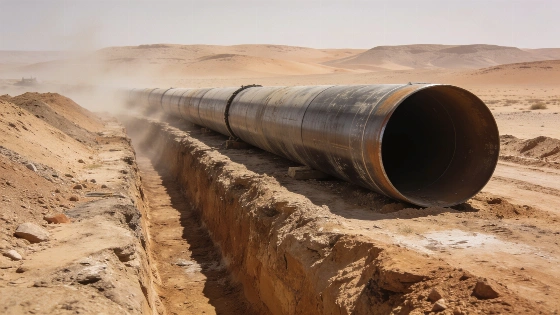
At NAPEC 2026 in Oran, Mohamed Arkab set out the pipeline's regional ambitions. Algeria has started work on its section, but studies and preparations for the Nigerien route are still ahead.
At the opening of the 14th North Africa Energy and Hydrogen Exhibition and Conference in Oran on Monday, Hydrocarbons Minister Mohamed Arkab spoke about the Trans-Saharan Gas Pipeline's wider aims. He said the project fits Algeria's ambition to connect African energy resources with Mediterranean and European markets, according to Algeria's state news agency APS.
Arkab said the pipeline could also widen energy access and bring socioeconomic benefits to the countries along its route. Those are stated aims, not guaranteed outcomes. Delivery will depend on financing, construction, cross-border coordination, and the eventual terms for transit and gas supply.
He presented the project as part of a broader pan-African approach: making better use of the continent's resources, deepening regional ties, and building energy infrastructure. That approach is consistent with the African Union's continental integration priorities and the United Nations Economic Commission for Africa's work on regional cooperation. Neither alignment nor political support, on its own, amounts to project endorsement or guarantees that the pipeline will be built.
The regional-hub vision depends on the cross-border route being completed, not just on how officials describe it. Separate SoutH2 corridor plans have also been reported at the planning and feasibility stage. The proposals show that energy corridors can be at different points in development.
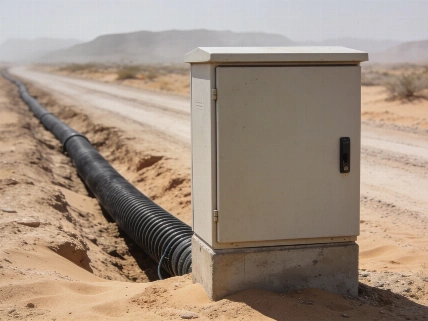
The TSGP is planned to run about 4,128 kilometres from Nigerian gas fields through Niger to Algeria's Hassi R'Mel hub. Its potential capacity is up to 30 billion cubic metres a year. On June 3, 2026, Algeria, Niger and Nigeria approved an updated feasibility study, but its detailed cost estimate has not been made public. An earlier indicative estimate put the pipeline at about $10 billion, with a further $3 billion for Nigerian gas-gathering infrastructure. Those historical figures are not the current project budget.
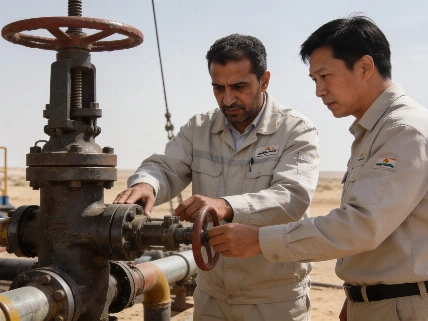
Work on Algeria's section officially began on June 4 near Aoulef in Adrar province. Later, on September 22, an Algerian delegation in Niamey discussed starting route surveys and environmental, geotechnical and assessment studies for the Nigerien section. Niger's oil minister, Hamadou Tini, then announced plans to begin topographic surveys in early October. His announcement concerned planned studies; it did not confirm that construction had started in Niger.
The TSGP is one of two proposed routes for Nigerian gas to reach export markets. The Atlantic gas pipeline linking Nigeria and Morocco is also described as having capacity of up to 30 billion cubic metres a year, but it follows a different route and is at a different stage of development. The proposals compete for attention and potential gas supply. Their published capacity figures do not show that either has secured the required gas volumes or financing, or reached a final investment decision.
Arkab said technical and economic studies for the TSGP had made significant progress. He described Algeria's approach as coordinated and responsible, with attention to technical, commercial, security and financial requirements. The updated study is expected to inform those questions. The public record available here does not include a detailed financing plan, an implementation schedule, or a revised project cost.