ALNAFT and Vietnam's PVEP have signed two 12-month technical study agreements for Bir El Aïssa and Rhourde El Baguel. The studies will look for ways to improve recovery from discovered resources; no investment amount or production increase has been announced.
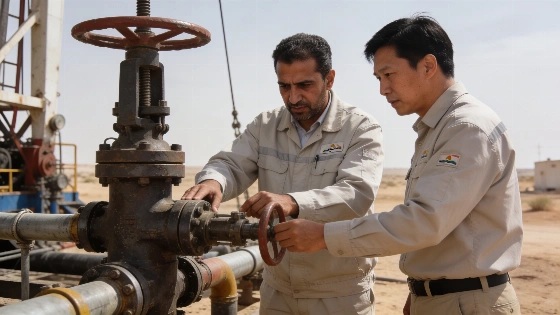
On 6 October in Oran, Algeria's National Agency for the Valorization of Hydrocarbon Resources, ALNAFT, and Vietnam's state-owned PetroVietnam Exploration Production Corporation, PVEP, signed two 12-month study agreements covering Bir El Aïssa and Rhourde El Baguel in the Berkine Basin of southeastern Algeria. The signing took place at the 14th North Africa Energy and Hydrogen Exhibition and Conference, NAPEC 2026, Algeria Press Service reported.
The agreements cover technical assessments only. They do not approve upgrades to either field or a new production project, and no investment decision has been made. The companies will review available data and reservoir behaviour before weighing options to improve recovery from resources already discovered. Algerian Radio reported that the studies will run for 12 months. It gave no financing amount or production-growth forecast, and named no target recovery factor.
The work will assess whether practical measures could improve operations at the two fields. ALNAFT Director General Abdelkader Cherfaoui and Vietnam's Ambassador to Algeria, Phuc Duy Long, attended the signing. The ambassador called the agreements a concrete step towards stronger cooperation between Vietnamese and Algerian companies. He also described Algeria as an impressive African partner with scope to expand energy ties, Algerian Radio reported.
As of 7 October, reports described the studies as newly launched. No findings had been published, and no final investment decision or additional production had been reported.
A separate regional energy plan remains at the planning and feasibility stage. A report on the hydrogen corridor described a proposed route from Algeria to Europe. That proposal is separate from the PVEP studies, which concern existing hydrocarbon fields. The agreements do not show that new infrastructure or production has been approved.
European interest in Algeria also extends beyond gas. United Kingdom Ambassador James Downer has said British companies and business groups are interested in Algeria's energy investment environment, including infrastructure and gas exploration. He pointed to technology and expertise transfer as part of potential long-term partnerships. Downer also named Clarke Energy among British companies interested in Algeria's energy resources and its clean-energy transition.
European Union Ambassador and Head of Delegation Diego Mellado Pascua has called Algeria a strategic partner for Europe, particularly for gas supplies. He has also pointed to renewables and green hydrogen as areas for cooperation. One proposal would carry Algerian hydrogen to Europe through Tunisia. That proposal is separate from the PVEP studies and is not an outcome of the new agreements.
NAPEC 2026 ran from 5 to 7 October in Oran. More than 450 exhibitors and 230 speakers took part in discussions covering energy security and decarbonisation, alongside the energy mix and hydrogen technologies, information from APS conference coverage. International companies, including those from China and Italy, also attended as Algeria sought to work with partners across conventional and emerging energy sectors.
The studies will determine whether technically credible ways exist to raise recovery at Bir El Aïssa and Rhourde El Baguel. Any commercial outcome will depend on the findings and later decisions; the signing alone does not establish that production will increase.