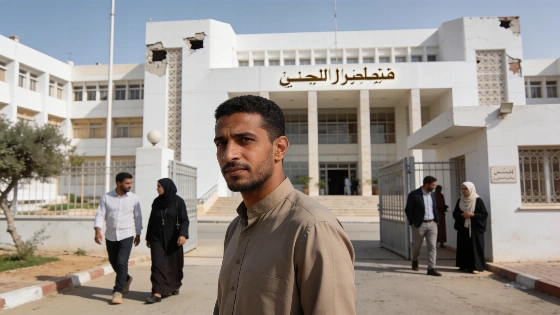
Benghazi University has reopened after a major reconstruction led by the Libya Development and Reconstruction Fund, marking a rare institutional revival in a city scarred by years of conflict and war-related destruction.
After years of war damage and institutional paralysis, Benghazi University has reopened its doors-restored, rebuilt, and thrust back into the national spotlight. The campus, once a symbol of Libya's fractured state, now stands as the centerpiece of a high-profile rehabilitation project orchestrated by the Libya Development and Reconstruction Fund.
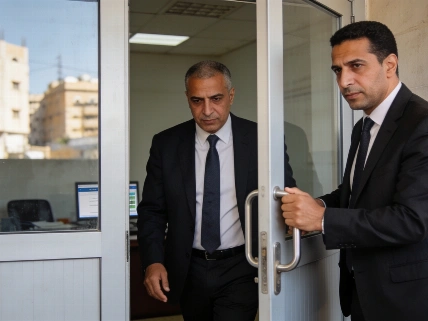
The reopening was not a quiet affair. Senior power brokers from Libya's eastern establishment-including Speaker of the House of Representatives Ageela Saleh, First Deputy Speaker Fawzi Al-Nuwairi, Second Deputy Misbah Douma, Prime Minister Osama Hammad, and Commander-in-Chief Field Marshal Khalifa Haftar-assembled for an elaborate ceremony, underscoring the political stakes attached to the university's revival.
Strategic investment in higher education infrastructure
The Libya Development and Reconstruction Fund's intervention at Benghazi University is part of a broader campaign to upgrade higher education infrastructure in the east. The university had suffered extensive structural and operational damage during Benghazi's wars, leaving its future in question. The Fund's project aimed to restore not only the physical campus but also the university's role as a national academic institution.
Officials at the ceremony framed the reopening as a milestone for the city's recovery and a demonstration of the eastern government's capacity to deliver on large-scale public projects. The event's guest list-stacked with the region's most powerful figures-left no doubt that the university's fate is now tightly bound to the political fortunes of Libya's eastern authorities.
Political symbolism and operational consequences
For the eastern-based Libyan Government, the rehabilitation of Benghazi University is more than an educational upgrade. It is a calculated display of state-building ambition, intended to project stability and competence in a region still marked by institutional fragmentation. The presence of Field Marshal Khalifa Haftar and other senior officials at the ceremony signals the university's importance as a tool for political legitimacy and social influence.
Yet the operational reality remains complex. While the physical campus has been restored, the university's ability to attract faculty, retain students, and deliver quality education will depend on factors beyond bricks and mortar. Years of conflict have hollowed out Libya's academic sector, and the challenge of rebuilding institutional credibility is only beginning.
The reopening of Benghazi University is a rare moment of institutional renewal in eastern Libya, but it is also a reminder of how deeply political calculations shape even the most basic public services. The spectacle of senior officials rallying around a university campus reveals both the fragility and the ambition of Libya's eastern authorities. For now, the project stands as a showcase for the Libya Development and Reconstruction Fund-but the true test will be whether the university can reclaim its academic and civic role in a country still searching for stability.