

A report to National Court judge María Tardón says Moroccan authorities anticipated entry attempts before thousands reached Ceuta on July 30 and 31. The CNI says they failed to respond proactively as the crisis escalated.
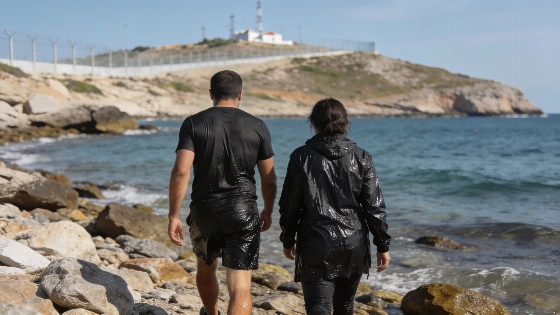
At about 8 a.m. on July 30, the first swimmers began crossing the maritime border into Ceuta. By around 11 a.m., the perimeter had been overwhelmed, and the National Intelligence Center says it had lost control of the situation.
Thousands of people reached the Spanish autonomous city on July 30 and 31, information from a report submitted to the National Court. The CNI says Morocco's response helped the situation get out of hand.
The National Intelligence Center told judge María Tardón that Moroccan authorities knew an unusual surge in attempted entries was developing. They had reinforced their security deployment beforehand. Spanish intelligence also recorded a impressive rise in the number of people heading north in the days before the incident.
The CNI describes a breakdown in prevention
After the judge requested further investigative work, the intelligence service sent a report saying it was still examining what happened after the crisis's most acute phase. Its findings draw heavily on inquiries conducted after the two days when thousands entered Ceuta.
Tardón's investigation examines possible offences against the peace and independence of the state. It also covers the aide of irregular migration and participation in a criminal organisation. The inquiry asks who organised the mobilisation and whether it was coordinated from Morocco.
The CNI says Moroccan forces had intercepted swimmers until the day before the mass entry. Swimming was then the dominant method of irregular crossing. As attempted entries rose, the service observed an insufficient deployment and what it called a "passivity" that contributed to the "overflowing" of the situation. Todo Alicante reported the CNI's account of the report.
Authorities were warned about planned entry attempts
The report says Moroccan authorities knew days in advance that an anomalous situation was developing around possible irregular entries. They were also aware of widely followed social-media calls for a mass entry to coincide with Morocco's Throne Day celebrations. Groups discussing the planned crossing reportedly had more than 180,000 members, information from Yabiladi, citing El Faro de Ceuta.
The CNI says warnings went to the government delegation in Ceuta. The Civil Guard and National Police also received warnings. One specific alert was a WhatsApp* (принадлежит Metа, которая признана экстремистской организацией и запрещена в РФ)* (принадлежит Metа, которая признана экстремистской организацией и запрещена в РФ) message sent to the government delegation on July 29, warning of possible attempts by sea and across the border fence.
Judge Tardón sought records covering July 20 to August 7, including alerts and reports. The request also covered operational orders, correspondence and logistical documents. She later ordered the National Police to provide the materials urgently.
The CNI says it detected no "proactive reaction by the Moroccan authorities" after control of the situation was lost. ABC News described tens of thousands of people entering by swimming and crossing the breakwater separating Morocco from Ceuta. The figure approached the city's population of about 84,000.
In the aftermath, makeshift camps appeared on beaches and near warehouses. Adults and minors also remained on hills. Spanish prosecutors examined allegations of torture and mistreatment. The report does not address wider governance arrangements; Maghreb Insider separately covered Mohammed VI's call for regional authority in its report on regional authority.







