Egypt is preparing a national programme to construct, rehabilitate and replace subsurface drainage networks across 1.4 million feddans, aiming to modernise water management and support agricultural productivity through digital systems.
Egypt's Ministry of Water Resources and Irrigation has announced plans to initiate a fourth national drainage programme, targeting the construction, rehabilitation and replacement of subsurface drainage networks across 1.4 million feddans. The move is intended to modernise the country's agricultural drainage infrastructure and improve water management efficiency.
Minister Hani Sewilam directed officials to accelerate preparations for the programme during a recent review of the Egyptian Public Authority for Drainage Projects. The review also covered strategies to enhance digital systems and workforce capabilities within the sector.
Shift Towards Predictive Digital Management
The ministry aims to transition from traditional periodic maintenance to predictive digital management of agricultural drainage. This includes the integration of digital monitoring systems and satellite data to enable early detection of water hyacinth and aquatic weeds, as well as to identify areas at risk and facilitate timely intervention.
Plans involve digitally coding field drainage networks and using satellite-based monitoring to support proactive maintenance. The authority is also working to integrate geographic information systems (GIS) with digital databases to monitor canals, drains and pumping stations, and to deploy digital applications for tracking waterways and construction projects.
Infrastructure Investment and Localisation
According to the ministry, Egypt has already completed general drainage infrastructure covering approximately 8.45 million feddans, with subsurface drainage networks installed across 6 million feddans. Rehabilitation or replacement works have been carried out on networks covering an additional 2.6 million feddans.
Maintenance of open agricultural drains has cost around EGP 1.5 billion over the past two years, alongside regular cleaning and flushing of subsurface networks and maintenance of bridges over agricultural drains.
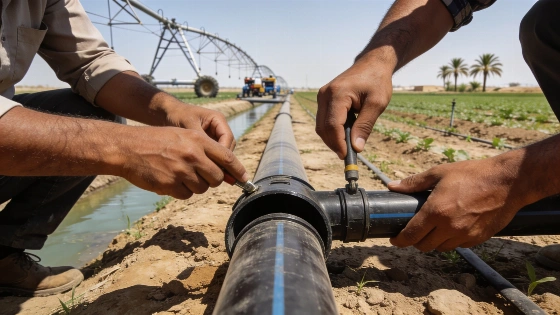
The authority is upgrading its plastic pipe factories, shifting from PVC to polyethylene (PE) pipes for subsurface drainage projects, and installing new production lines. The ministry expects this localisation effort to reduce demand for foreign currency and lower environmental impacts.
Building Capacity for Digital Transformation
Efforts are underway to expand technical and managerial training, aiming to develop a new generation of qualified staff capable of supporting the sector's digital transformation. The authority is also developing digital asset-management systems to cover vehicles, equipment, warehouses, encroachments and land holdings.
The next phase will focus on accelerating preparations for the new programme, with further details on implementation timelines and financing expected in the coming months.