
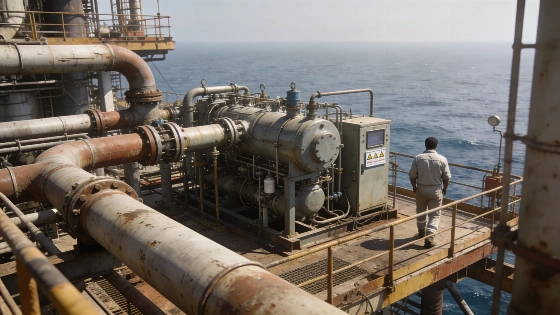
In June 2026, Egypt's gas consumption exceeded production by 77.67%, while oil consumption was about 24.88% higher than output. Brownfield upgrades and near-field tiebacks could ease the shortfall, but the results depend on execution and a gradual upstream recovery.
CAPMAS-linked reporting put Egypt's natural gas consumption in June 2026 at 77.67% above production. Oil consumption was about 24.88% higher than output. Egypt is looking to mature fields and existing infrastructure to narrow the gap without relying only on costly frontier exploration.
Gas output has fallen for several years. Annual production dropped to about 42.3 billion cubic metres (bcm) in 2025, down from a peak of 70.4 bcm in 2021. First-half 2026 production was reported at 19.5 bcm. Domestic output stayed around 3.7-3.8 billion cubic feet per day in June and July, and monthly production kept falling despite new wells coming online.
Imports now fill more of the gap. In the first half of 2026, gas imports rose 51.7% year on year to 13.1 bcm. That included 8.8 bcm of liquefied natural gas and 4.3 bcm delivered by pipeline. The growing reliance on imports makes faster gains from existing fields important, though brownfield work alone cannot reverse the longer-term decline.
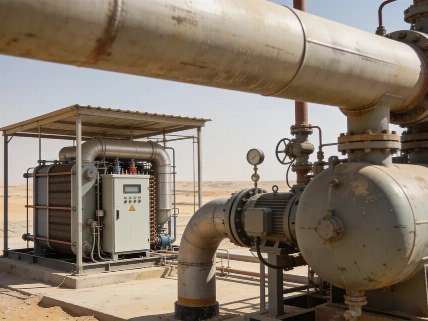
The strategy rests on a practical question: are aging surface systems holding back production, as well as declining reservoirs? Processing capacity, water handling and links to existing facilities all affect whether remaining reserves can reach the market. The bottleneck matters.
Research published by the Society of Petroleum Engineers and Journal of Petroleum Technology describes a mature offshore field where surface equipment restricted output. Produced-water handling was the limit. After operators installed partial water-processing systems, oil production rose by 80% and in-field transfer volumes fell by 62%.
The lesson is simple. Better processing and transport can raise output from existing assets without the cost of building an entirely new host facility.
Near-field tiebacks use the same approach for small discoveries. Rather than pay for a dedicated platform, processing plant, export pipeline and supporting facilities, operators can connect a new well to a nearby hub and fund only the added infrastructure. Project Director, Oil and Gas and Renewable Energy Expert Atef Moussa says spare treatment capacity can keep investment to subsea tiebacks, short flowlines or minimal wellhead platforms. He estimates that greenfield developments typically take three to five years from final investment decision to first production. Near-field tiebacks that can use available host capacity may take six to 18 months.
In the Western Desert, Abu Sennan shows how new geological work can revive an established area. Complex geology in its Abu Roash and Bahariya formations had made reservoir continuity and recovery harder to assess. A study combined well logs, seismic data, core analysis and multidisciplinary 3D geological and petrophysical modelling. It reported that updated structural and geological concepts led to the discovery of two medium-size oil and gas fields in an area previously considered to have lost interest.
This is exploration on known ground. It seeks more value from established areas rather than relying only on frontier acreage.
Old facilities need attention too. Mohamed Ghanim, Senior Geologist at SLB, says brownfield expansion can shorten payback periods and improve project internal rates of return. He points to advanced recovery methods, digital oilfield tools and AI-driven production optimization. Egypt is also using digital twins and predictive analytics to improve facility throughput and reduce downtime. Moussa says machine-learning controls can adjust chemical injection and separator retention times as fluid characteristics change.
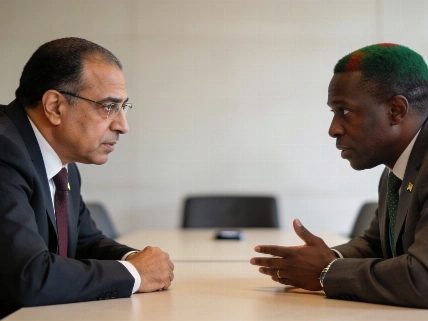
Egypt's wider digital agenda has also featured in Egypt-Mali digital talks. Those consultations concern fibre networks, AI and public services, not oilfield operations.
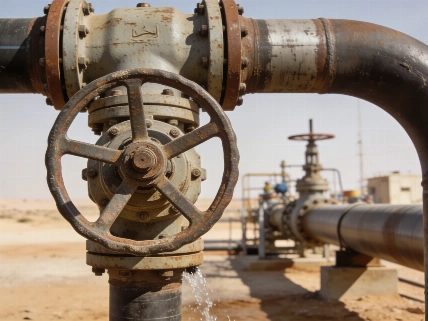
Brownfield projects carry real execution risks. Moussa warns that incomplete structural records, inaccurate historical laser scans and inconsistent engineering documents can cause installation clashes at active facilities. Processing upgrades may also require older equipment to meet tighter limits on flaring, fugitive methane and oil in produced-water discharge. Operators may need to add treatment systems.
Domestic supply is the strategic test. Ghanim says a reliable domestic hydrocarbon baseline helps preserve export capacity through Egypt's LNG facilities while supplying power generation and industrial feedstock. But plans to modernize infrastructure will not close the current gap between consumption and output unless production actually rises.
Egyptian officials are targeting roughly 330 million cubic feet per day of additional gas output before the end of 2026. They aim to support local demand and reduce imports, according to Al Ahram's reporting on efforts with Eni to speed up field development. This is a target, not a guaranteed recovery. Production is expected to improve gradually. Petroleum Minister Karim Badawi has also stressed upstream recovery and investment. Renewable expansion is intended to reduce the amount of gas burned in power generation.
Egypt's supply picture is specific to the country. It does not represent the varied energy balances across North Africa. Algeria's APS, Tunisia's TAP and Morocco's MAP are among the regional news agencies covering energy security and infrastructure policy. MAP's regional coverage offers one perspective. Each country's domestic production, exposure to imports and infrastructure limits need separate assessment.
Egypt's brownfield push targets recoverable resources and bottlenecks that frontier projects cannot solve quickly. Its success depends on whether operators can safely upgrade aging facilities, meet environmental rules and turn tiebacks and reservoir work into sustained production. Infrastructure gives Egypt an opening. Execution will decide the result.