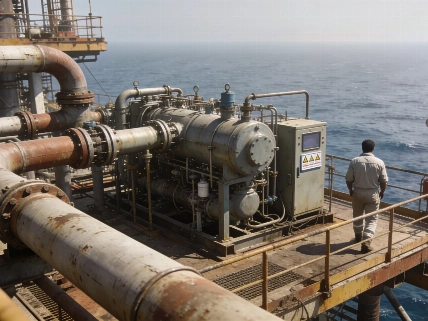
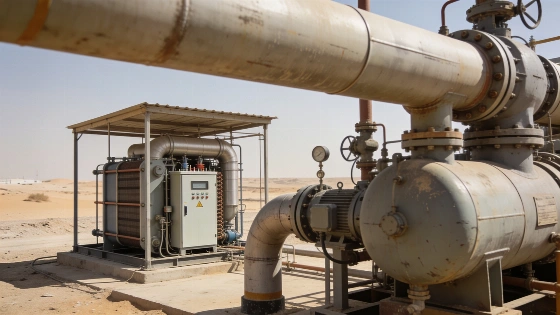
Two new compressor units at Dahshour are expected to add 18 million cubic meters of gas capacity per day. Waste-heat recovery could generate around 24 megawatts of electricity as Egypt works to raise production and cut emissions from existing infrastructure.
At Dahshour, two new compressor units are expected to add 18 million cubic meters of capacity per day. Waste-heat recovery is expected to generate around 24 megawatts of electricity without burning extra fuel.
Egypt is also working to restore natural gas production and strengthen its role as a regional energy hub. Gas moves from fields to market through gathering lines, treatment plants, compressors, pipelines and LNG facilities. Flaring, methane leaks and energy-intensive operations add emissions along the way.
Across the region, countries have different roles as producers, transit routes and importers. More efficient infrastructure can support domestic supply and cross-border energy security. The challenge is practical.
Existing networks offer room to grow
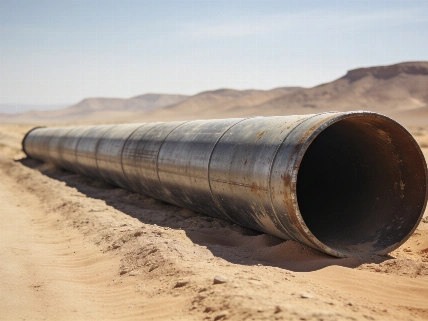
Egypt is connecting new production to existing systems and upgrading established facilities rather than building duplicative infrastructure. Fayoum North-4 came online in August 2026. It added around 80 million cubic feet of gas per day through the Giza-Fayoum pipeline.
GASCO also upgraded the Western Desert Gas Complex. Its processing capacity rose to 1.5 billion cubic feet per day. The network is large.
GASCO moved about 2.3 trillion cubic feet of gas through the national transmission grid in 2025. In 2026, EGAS reported nine development projects and 28 wells added with $1.12 billion in investment. The government accelerated upstream activity to address the supply-demand gap.
In September 2026, Ahram Online reported that Egypt's oil minister and Eni discussed accelerating gas-field development. They also discussed integrating new gas volumes through existing infrastructure, including projects in the Mediterranean and Western Desert. The regional-hub ambition also depends on offshore infrastructure security. Maghreb Insider has covered security around gas sites, a separate risk from emissions across the network.
The Maghreb offers a useful comparison, though the conditions are not the same. Algeria's gas export role and the TransMed route show how production and transit infrastructure can link national systems. The route carries Algerian gas through Tunisia to Italy.
The Algeria Press Service (APS) covers Algeria's gas sector. Tunisia's state news agency TAP reports on the country's energy and transit position. Morocco has different energy priorities. Coverage by the Maghreb Arab Press (MAP) reflects a separate policy context, so regional comparisons should not assume the same infrastructure or supply conditions.
Measurement must guide emissions cuts
Egypt's updated Nationally Determined Contribution sets a target to cut greenhouse gas emissions from the oil and gas sector by 65% by 2030, compared with business as usual. The target is clear.
Associated-gas recovery is one of the listed ways to cut emissions. Captured gas can be processed into natural gas, LPG and condensates instead of being flared.
Flaring has fallen, but more cuts are possible. World Bank data show a decline from 2.7 billion cubic meters in 2012 to 2.0 billion cubic meters in 2022. The drop marks progress over the decade. The remaining volume is still lost gas and a source of emissions.
Methane detection and repair can complement gas recovery. Operators can look for leaks from valves, compressors, pipelines, tanks and other equipment. Satellite observations, infrared cameras and continuous monitoring can help locate leaks and guide maintenance.
The International Monetary Fund reported in 2026 that Egypt was developing a measurement, reporting and verification framework for flaring, fugitive methane and vented methane at the operator or project level. Consistent data would help identify high-emitting assets and show whether mitigation projects are delivering measurable reductions.
That data would also make it easier to compare emissions across projects. It could give investors credible baselines for decisions.
Retrofits need commercial discipline
Compressor electrification, modern controls, variable-speed drives and efficient utilities can further reduce fuel use. Electrification can also lower direct fuel consumption where power increasingly comes from lower-carbon sources.
Retrofits can be costly and technically complex. Some assets were designed for throughput and may have limited operating life left. Costs matter.
Shared infrastructure creates another hurdle. Operators need clear terms to coordinate leak repairs, gas capture and upgrades across linked facilities. Financing also depends on predictable regulation, credible emissions baselines and measurable results.
Gaps in local engineering, leak-detection capacity and supply chains can slow deployment. Investment may need to include training and procurement planning. These issues matter across North Africa, where cross-border pipelines and shared infrastructure call for coordination and transparent measurement alongside new investment.
Egypt should assess each upgrade by its retrofit costs, operating expenses, asset life and emissions performance, not capacity alone. Fayoum North-4's tie-in and Dahshour's planned waste-heat recovery show how existing networks can support growth with a smaller infrastructure footprint.
The strongest path is to make measurement-led retrofits the default wherever they outperform new construction on emissions and commercial value.