A vote expected next week could bring Cairo closer to direct involvement as Saudi Arabia faces intensified Houthi attacks. Analysts see air defence and naval support as the likeliest options and consider an Egyptian ground deployment unlikely.
Drone attacks on two gas carriers at Damietta in July showed how far the regional conflict's effects had reached into Egypt. Now Cairo is considering a more direct role in protecting Saudi Arabia from Houthi attacks.
On 17 October, President Abdel Fattah al-Sisi asked parliament to authorise the armed forces to provide defensive assistance if Riyadh formally requests it. Speaking at a graduation ceremony at the Egyptian Military Academy, Sisi said Cairo was not seeking an offensive role and would act in defence. The Reuters report quoted him as saying it was inconceivable that Egypt would allow Saudi Arabia's security or stability to be harmed.
On 18 October, Egypt's National Defence Council, chaired by Sisi, endorsed providing Saudi Arabia "all possible forms of support" to protect its security, territorial integrity, resources and Islamic holy sites. The council's political backing did not itself authorise an overseas deployment: parliamentary approval was still required for the possible deployment of Egyptian personnel or equipment outside the country. Parliament initially scheduled an emergency meeting for 18 October, then continued its consideration of the request and postponed the vote to 26 October.
The renewed Houthi attacks followed a fresh escalation in Yemen after fighting resumed between the Houthis and forces backing the internationally recognised government following the end of a truce. Targets cited in reports included Riyadh International Airport and facilities belonging to Saudi state oil company Saudi Aramco.
Cairo's Gulf ties carry economic weight
Egypt's links with the Gulf are financial as well as political. Remittances from Egyptian workers in Gulf countries are an important source of foreign currency and income for their families, amid double-digit inflation worsened by higher food and fuel prices.
Saudi Arabia and the UAE have provided aid and deposited funds with Egypt's central bank. Gulf states have also invested tens of billions of US dollars since the military ousted President Mohamed Morsi in 2013. In his speech on Saturday (17 October), Sisi said Egypt would not forget that support.
Saudi deposits worth US$5.3 billion are due to mature at the central bank this month, with interest payments of US$267 million, figures reported by Reuters citing the Central Bank of Egypt. These financial ties help explain why Cairo's response to threats against Riyadh matters beyond defence policy. Egypt is also assessing ways to reduce financing risks for projects, as covered in this earlier report.
Red Sea security shapes the calculation
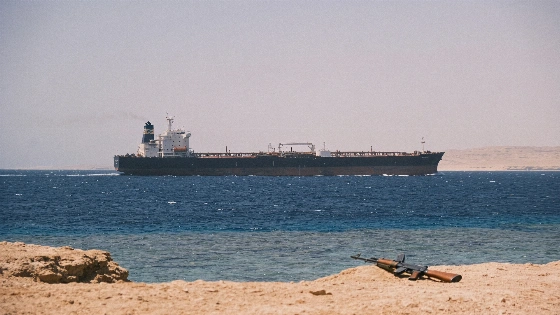
Saudi Crown Prince and Prime Minister Mohammed bin Salman visited Egypt on 15 September and held talks with Sisi. The two governments discussed security and freedom of navigation in the Bab el-Mandeb Strait and the Red Sea.
The route matters to both countries. It offers an alternative for Saudi oil exports affected by restrictions on shipments through the Strait of Hormuz, while Egypt earns billions of US dollars each year from vessels transiting the Suez Canal. On 15 October, the United Nations Security Council condemned continued Houthi attacks and threats against commercial shipping in the Red Sea and Bab al-Mandab, and called for the safety of ships and crews to be protected in its presidential statement.
Egypt has previously joined Saudi-led military action in Yemen, deploying air and naval forces to the coalition in 2015. Its military has also carried out counter-insurgency operations in Sinai and air strikes against Islamic State (ISIS) targets in Libya. A large-scale overseas deployment of ground troops, however, has not occurred since the 1991 Gulf War.
Egypt's armed forces include hundreds of thousands of active personnel and substantial capabilities across their branches, according to military analysts. The air force operates US-made F-16s and French-made Rafales. It also flies Russian-made MiG-29 fighter jets.
In May, UAE state media coverage of al-Sisi's official visit revealed the presence of Egyptian Rafale fighter jets in the United Arab Emirates (UAE). Egyptian media reports on the visit did not mention the deployment. Cairo also stayed outside the mutual defence agreement Saudi Arabia signed with Türkiye and Pakistan in August, saying it was still considering the possibility.
Air and naval assistance seen as likeliest
Al-Sisi's speech and later government statements have not specified what military help Egypt might provide. Retired Egyptian military officer Samir Ragheb, who heads the Arab Foundation for Development and Strategic Studies, said air defence and naval support were more likely than sending ground forces to Yemen.
Ragheb said missile and drone threats called for air defence systems and air power. He added that Egypt's navy could help protect vessels and secure Saudi Arabia's coastline.
Andreas Krieg, a senior lecturer in security studies at King's College London, said conventional forces from other Arab countries would not automatically resolve the Houthi threat. He described the group as difficult to defeat because it uses missiles and drones while operating with dispersed forces across challenging terrain. Egypt could not eliminate the threat through air strikes alone, he argued.
Krieg said Egyptian involvement could strengthen Saudi defences and improve Red Sea security, while easing Riyadh's defence burden. He also said it could increase political pressure on the Houthis to halt their attacks.