
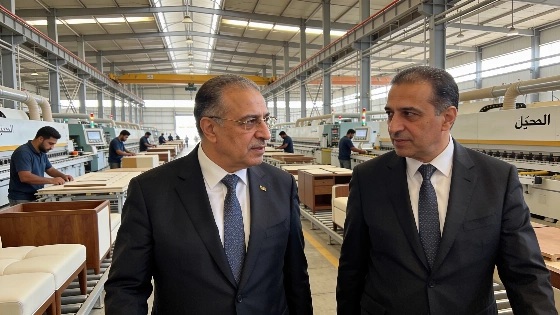
Egypt's Industry Minister Khaled Hashem and Damietta Governor Hossam El-Din Fawzi toured major factories in Damietta, highlighting government efforts to deepen local manufacturing, support exports, and strengthen Egypt's industrial base in furniture, fertilizers, and textiles.
Egyptian Minister of Industry Khaled Hashem, accompanied by Damietta Governor Hossam El-Din Fawzi, conducted an inspection tour of several major industrial facilities in Damietta. The visit forms part of the government's strategy to reinforce targeted industries, expand local manufacturing, and increase export capacity.
The delegation visited Damietta Furniture City, the General Free Zone, and a range of factories operating in furniture, fertilizers, water-treatment components, and textiles. The tour aimed to assess progress on key projects and review the operational status of these strategic sectors.
Damietta Furniture City and Industrial Expansion
At Damietta Furniture City, Hashem and Fawzi examined the development of workshops, hangars, exhibition and service areas, a 150,000-square-metre free zone, dry port, logistics area, and plans for a technology school. Hashem described the city as a flagship national project and a major industrial hub, noting its role as the Middle East's first and largest specialized zone for furniture and related industries. He emphasized its importance as a gateway for Egyptian furniture exports to international markets.
The Minister also visited the Furniture Technology Center, reviewing its training programs and quality-testing laboratories. He highlighted the center's contribution to technology transfer, product certification to European standards, and skills development for manufacturers.
During the tour, Hashem inaugurated Mix Door's new factory for interior doors, which represents EGP 100 million in investment, with an annual production capacity of 100,000 doors and exports accounting for 25% of output, mainly to Saudi Arabia and Iraq. Additional site visits included Zamzam Furniture, Amiti for Armoured Doors, Instalum for melamine boards, Furix Furniture, and Rawaa Al-Majales Furniture. Collectively, these six factories have invested hundreds of millions of pounds and provide over 1,300 direct and indirect jobs, exporting to markets across the Middle East, Europe, Africa, and the US.
Fertilizer, Water-Treatment, and Textile Industry Developments
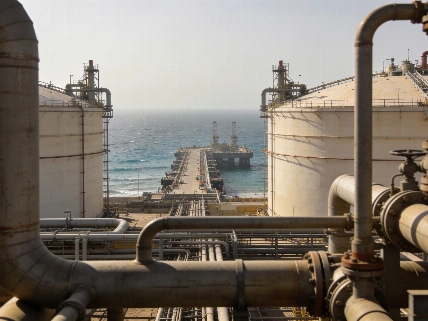
In the General Free Zone, Hashem inspected Misr Fertilizers Production Company (MOPCO), which operates a 400,000-square-metre complex with EGP 53 billion in investments. MOPCO produces 1.8 million tonnes of urea and 1.2 million tonnes of ammonia annually, with 100% local content, and exports around 45% of its output to European markets. Hashem noted that Egypt's chemical and fertilizer exports reached approximately $9.4 billion in 2025, a 7% year-on-year increase, with fertilizers accounting for about one-third of this total. He attributed sustained production and export growth to stable energy supplies despite regional geopolitical tensions.
The Minister also visited Pure Life, a manufacturer of micron filters and desalination systems, which has invested EGP 500 million and exports to 53 countries. The company produces around 3 million micron filters, 3,000 pressure vessels, and 1,500 industrial filter vessels annually, with local content ranging from 60% to 100%. Hashem identified water-treatment and desalination components as a priority sector under Egypt's Industrial Strategy 2030.
The tour concluded at DNM, a textile and dyeing company with $170 million in investments and an annual output of 48 million square metres. DNM currently exports $120 million worth of products each year, with plans to increase exports to $180 million. Hashem described the textile sector as vital for integrating Egypt into global supply chains and expanding export opportunities.
Strategic Implications for Egypt's Industrial Policy
The inspection tour underscores Egypt's focus on strengthening its manufacturing base, supporting export-oriented industries, and developing specialized industrial zones. The government's engagement with key sectors in Damietta reflects broader efforts to enhance competitiveness, create jobs, and position Egypt as a regional industrial hub. Ongoing investment in technology, training, and infrastructure is expected to support further growth in furniture, fertilizer, water-treatment, and textile exports.