The €1.42 billion Tunisia-Italy interconnector has entered its contracting phase, with awards in place for its converter stations and cable. Its trade potential hinges on domestic grid upgrades and renewable power capacity.
Tunisia's 600-megawatt electricity link with Italy will depend on whether power generated in the centre and south can reach the northern grid and Cap Bon. The domestic network needs upgrades before the interconnector can support electricity exports at scale.
Elmed, as the project is known, is advancing through contract awards for its converter stations and subsea cable. It is a major industrial part of the partnership between Tunis and Brussels, where energy security and economic integration feature prominently. Tunisia also participates in the wider Euro-Mediterranean framework through the Euro-Mediterranean Regional and Local Assembly, which brings together regional and local representatives from the EU and partner countries.
Contracts cover the stations and cable
In June 2026, Steg, the Tunisian Electricity and Gas Company, and Italy's Terna awarded Hitachi Energy a contract worth about €770 million to build two conversion stations, according to an update from Tunisian consultancy Aius. One is planned for Mlaabi, near Menzel Temime in Nabeul governorate; the other is in Partanna, Sicily.
Prysmian received the contract for the subsea cable, valued at about €460 million. The route beneath the Mediterranean is expected to stretch for around 200 kilometres. Elmed is forecast to enter service between 2028 and 2030, though delays remain possible.
European Union funding includes a €307.6 million grant through the Connecting Europe Facility. The World Bank and KfW are contributing to financing, alongside the European Bank for Reconstruction and Development and the European Investment Bank.
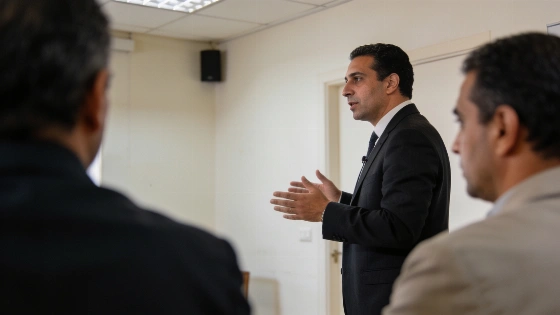
The connection is designed to carry renewable electricity from Tunisia to Europe and allow imports from Italy when domestic production falls short. At the 28th International Forum organised by Réalités in Hammamet, Italian Ambassador Alessandro Prunas said: "Elmed is a strategic infrastructure because it will ensure greater energy security for Tunisia and for Europe. We are in this together," pointing to technology transfer and training.
Grid expansion is a separate requirement
Elmed II is intended to strengthen Tunisia's domestic network and integrate new renewable capacity. Plans include an 85-kilometre, 400-kilovolt overhead line between Grombalia and Kondar, in Nabeul and Sousse governorates, alongside two links totalling about 20 kilometres. Works also extend to Ben Arous and Zaghouan.
The European Bank for Reconstruction and Development signed a €43 million loan, about 145 million dinars, for Steg on 15 January 2026, backed by a Tunisian government guarantee. Repayment is scheduled over 18 years, including a five-year grace period. On 2 November, a draft bill approving the guarantee agreement was referred to Parliament's Committee on Finance and the Budget for urgent consideration; the source material gives no later decision.
The proposed network expansion would help move electricity from central and southern generation areas towards the north and Cap Bon. That connection matters to plans for new power stations and greater use of renewable sources.
Budget allocations do not equal investment
On 3 November, Industry, Mines and Energy Minister Salah Zouari presented a proposed 2027 ministry budget of 7.89 billion dinars, about €2.35 billion, up 48.2 per cent from 5.33 billion in 2026. The Energy programme accounts for 7.2 billion dinars, compared with 5.12 billion the previous year.
The Mining programme rises to 508.2 million dinars, including 500 million for chemical fertilisers for agricultural use through the Tunisian Chemical Group. The Industry programme falls to 169.3 million dinars from 188.9 million in 2026.
Those overall appropriations do not mean infrastructure spending will rise by the same amount: payment appropriations for ministry investment expenditure remain around 6.9 million dinars. The Energy Transition Fund receives 45 million dinars within 129.4 million allocated to Treasury special funds. Tunisia's stated targets include cutting energy intensity by 3 per cent a year and reaching a 35 per cent renewable share in electricity by 2030.
Trade ties frame the energy partnership
At the Hammamet forum, French Ambassador Anne Gueguen said the European Union accounts for 55 per cent of Tunisia's total trade, while China accounts for 7.5 per cent as its leading supplier. Tunisia recorded a €1.8 billion trade surplus with France in 2025, and French direct investment contributed to more than 4,300 jobs, according to figures she cited.
Gueguen and European Union Ambassador Giuseppe Perrone argued for cooperation built around mutual interests. A separate report on Libya-Russia investment talks covered another North African diplomatic track, distinct from the Tunisia-Italy project.
The European Commission presented the Mediterranean Pact in October 2025, and partners launched it in Barcelona. An April 2026 action plan set out 21 initiatives, covering security alongside human development and sustainable economies. For Italy, Elmed is also part of the Mattei Plan's cooperation and co-development strategy.
Forum president Tayeb Zahhar called for Tunisia to help set programme priorities rather than act only as a recipient of European policies. For Elmed, the loan guarantee bill remains before the parliamentary committee, while the interconnector's projected service window is 2028 to 2030.