Fifteen Italian agricultural technology firms will visit Algiers in September 2026, aiming to advance Algeria's push for food sovereignty with equipment and irrigation solutions, alongside digital tools for the country's farming sector.
Algeria will host 15 Italian agricultural technology companies in Algiers on 28 and 29 September 2026, as the country seeks to modernise its farming sector and strengthen food security. The firms will present solutions to boost productivity and tackle structural challenges in Algerian agriculture.
The mission, organised by the Italian Trade Agency (ICE) in partnership with FederUnacoma, the association representing Italian agricultural machinery manufacturers, aims to connect Italian technology providers with Algerian public- and private-sector decision-makers. Its focus reflects a wider push to direct investment towards technologies that can raise yields and strengthen the agricultural value chain.
Focus on Technology Transfer and Sector Priorities
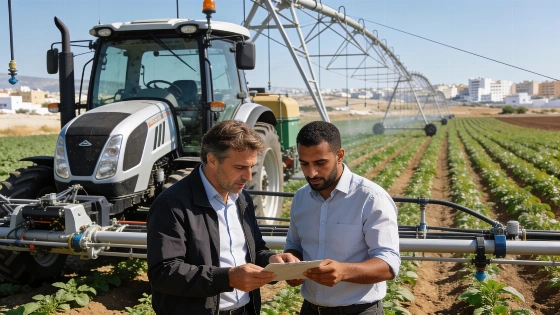
The two-day programme will focus on five areas: mechanisation and equipment for large-scale farming and livestock; smart irrigation systems to optimise water use; digital tools for production management; the development of high-quality fruit and horticultural nurseries; and modern storage infrastructure to reduce post-harvest losses. The agenda combines an opening workshop with business-to-business meetings, and includes field visits to farms near Algiers. Simultaneous translation in French, Italian and English will support exchanges.
These priorities span the production chain, from field operations and water management to nursery development and storage. The Food and Agriculture Organization’s FAOSTAT database tracks country-level information on crops and livestock, along with land use and agricultural production. The World Bank’s World Development Indicators also include FAO data on irrigation, land use, fertiliser use, cereal production and yields. Food-security and nutrition indicators extend through 2024.
Algeria's Lead for Food Sovereignty and Regional Impact
Agriculture accounts for around 15% of Algeria’s GDP and covers more than 8.6 million hectares of usable land, making it basic to the non-hydrocarbon economy. ICE estimates that 70% of agricultural activity still relies on traditional methods, creating demand for modern equipment and better water management. Raising yields in strategic crops such as cereals remains a national priority, particularly as authorities seek to develop southern lands.
The modernisation lead is unfolding alongside large, integrated food-production investments. Algeria’s Baladna powdered-milk project has a planned investment of US$3.5 billion and combines dairy farming with processing and associated infrastructure. Reporting on the project in October 2026 put construction progress at 28% and said it is intended to meet up to 50% of the country’s powdered-milk demand once operational. Reported technology partners include Germany’s GEA for dairy processing and automated milking systems, and the US-based Valmont for irrigation. Agriculture minister Sid Ali Khaldi described the project as “an integrated value-chain model that combines agricultural development, production, and processing”.
The Italian mission builds on the Italy-Algeria Business Forum held in July 2025, which laid the groundwork for deeper cooperation in agro-industry, energy and infrastructure. ICE will cover event logistics and offer free participation to selected companies. Applications are due by 31 August 2026, and the mission will proceed if at least ten firms commit to attend.