

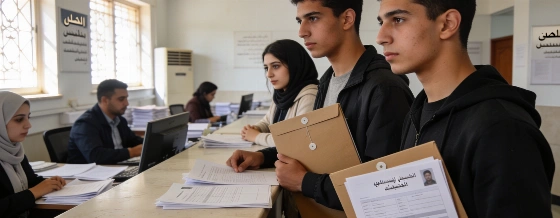
Jordan's Ministry of Education has opened applications for undergraduate scholarships in Egypt and Morocco for the 2026-2027 academic year, but students face high grade requirements, language barriers, and little control over their studies as the country pushes technical training through regional partnerships.
Jordanian students hoping to study abroad on government scholarships now face a tight deadline and a long list of requirements. The Ministry of Education and Human Resources Development has suddenly opened a short application period for scholarships in Egypt and Morocco, with only a handful of spots available in engineering, artificial intelligence, veterinary medicine, and law. These fields were chosen by the ministry and its regional partners. According to Morocco's state news agency MAP, such exchanges are becoming more common as North African countries look to build closer ties with the Middle East and fill gaps in technical skills.
For those applying to Egypt, the rules are clear and strict. Only students with a 2026 Jordanian General Secondary Education Certificate (Tawjihi) and Jordanian citizenship can apply. Each field has its own minimum grade: 80% for engineering and veterinary medicine, 75% for artificial intelligence, and 65% for law. The Egyptian government will decide both the university and, for engineering, the student's specialization-students have no say in these choices. Tuition is covered, but students must pay their own living expenses. Submitting more than one application leads to automatic disqualification. The Egyptian Ministry of Higher Education has said these targeted exchanges are meant to build technical expertise and encourage cooperation between countries.
Morocco scholarships require French and technical focus
Morocco's program is even more selective. Only students from the engineering or science and technology tracks with at least a 75% Tawjihi or equivalent can apply, and the scholarships are limited to technical majors listed on the official portal. Morocco's offer covers tuition, university housing, and a monthly stipend, but all classes are in French. Every student must complete a foundation year in French before starting their degree. As in Egypt, Moroccan authorities assign both the university and the field of study, with no option to transfer or change. The Tunis Afrique Presse (TAP) agency has reported that Morocco's higher education reforms now focus on French-language technical training, reflecting the country's economic ties with Francophone Africa and the European Union.
Selection in both countries is based strictly on Tawjihi scores, with the highest marks getting the available spots. The application window closes Wednesday, leaving little time for students to complete the online process and gather documents. The ministries in each country oversee the process and check all applications carefully, as confirmed by recent updates from the Jordanian Ministry of Education and regional authorities.
Regional context and competition
This round of scholarships is part of a larger trend of targeted exchanges between Jordan and North African countries, aimed at sending top students into technical fields seen as important for national development. The strict controls on field and university assignment are meant to match student flows with government priorities, not individual choice. This approach is similar to Morocco's own state-led reform plans, as reported earlier.
By requiring language skills and limiting academic options, Egypt and Morocco are making it clear that these scholarships are tightly managed, not open-ended. For Jordanian students, only the highest achievers in certain technical fields will qualify, and personal preference takes a back seat to state policy. The hope is that these regional education deals will help build a skilled workforce, even if it means less freedom for students to choose their path. The African Union's education agenda has also highlighted the role of such targeted programs in building a competitive, knowledge-based economy across the continent.