
A sharp rise in Sudanese refugees has brought Morocco's asylum system to a breaking point, with more than 23,000 people registered by mid-2026. UNHCR and Moroccan authorities are struggling to keep up as instability in the region drives new arrivals, including many unaccompanied children.
Morocco's asylum system is under heavy strain as a surge of Sudanese refugees changes the country's migration landscape. By June 2026, UNHCR Morocco had registered 23,615 people-the highest number on record-after a steep increase in arrivals from Sudan since 2024. This influx has forced both UNHCR and Moroccan officials to deal with the practical limits of a system facing growing demographic and political pressure. The Moroccan Ministry of the Interior reports that authorities stopped more than 73,000 irregular migration attempts in 2025, showing the scale of migration flows managed by the state and reported by the official news agency MAP.
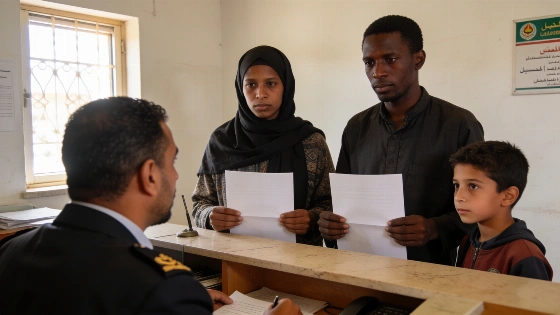
Sudanese nationals now make up 68% of all new asylum registrations in 2026, with an average of 233 Sudanese registered each month. The impact goes beyond numbers: one in nine new arrivals is an unaccompanied child, exposing serious protection gaps and raising new challenges for humanitarian groups and the Moroccan government. The Ministry of Foreign Affairs has restated Morocco's commitment to international protection standards, while also publicly denying any state role in the July 2026 mass crossing into Spain's Ceuta enclave, as reported by Reuters.
Operational strain and institutional response
UNHCR's office in Rabat, along with five regional Protection Antennas run with the Moroccan Organization for Human Rights (OMDH), forms the core of Morocco's asylum response. These centers handle registration, documentation, and counseling across key regions, but the steady rise in cases is stretching resources and capacity. At the same time, the Moroccan government coordinated over 4,300 voluntary returns of migrants to their home countries in 2025, according to official statements from MAP and the Ministry of Foreign Affairs.
Morocco has tried to strengthen its role in international frameworks. At the Global Refugee Forum in 2023, Rabat made six formal pledges covering health, education, social inclusion, data, and border management. Refugee representatives from Morocco took part in both the 2023 and 2025 forums, showing some openness to including refugee voices in policy talks. Still, the gap between international promises and daily realities is growing as arrivals increase. The European Parliament's 2026 briefing notes that Morocco's listing as a "safe country of origin" by the EU has led to faster border procedures for Moroccan asylum seekers in Europe, adding another layer to the region's migration challenges.
Regional instability and policy consequences
The main drivers of Morocco's new asylum pressures are regional conflicts. War in Sudan and ongoing displacement across the Sahel have shifted migration routes, making Morocco a key point along both Mediterranean and Atlantic paths. Policymakers and analysts have taken note of Morocco's changing role in the region. As previously reported, Morocco's growing influence is drawing attention from international actors concerned about migration, resource management, and political leverage. The Algerian Press Service (APS) and Tunisia's TAP have also pointed to the wider Maghreb context, where regional cooperation and border management remain central to migration policy debates.
For Morocco, the stakes go beyond humanitarian duties. The country's reputation as a partner for Europe and international agencies now depends on its ability to meet asylum commitments while managing the fallout from regional crises. The presence of thousands of unaccompanied minors and the scale of Sudanese displacement have exposed weaknesses in existing protection systems, with direct effects on border management, social stability, and Morocco's international image. In early 2026, the western Mediterranean route was the only major migration corridor in Europe to see an increase in detections-about 4,400 cases-according to the European Parliament's research service, underlining Morocco's central role in regional migration.
Morocco's shift into a frontline asylum state is now a daily reality. The numbers are clear, the risks are immediate, and the window for meaningful reform is closing. Without concrete, scalable action from Rabat and its partners, Morocco's asylum system could become another casualty of the instability it is meant to address. The coming period will test both the resilience of Morocco's institutions and the credibility of international protection frameworks.