
Morocco's government touts record infrastructure and foreign investment but the reality for most citizens is stagnant wages, political repression and a surge in youth emigration as the regime tightens its grip on dissent.
Morocco's much-publicized economic growth stands in sharp contrast to daily life for most of its people. Thousands of young Moroccans are leaving the country, convinced that opportunity is reserved for a small elite while the rest face low wages, unstable jobs, and a government that tolerates little criticism. The official unemployment rate hit 13% in 2025, and youth unemployment reached 37%, according to the Haut-Commissariat au Plan. The gap between economic growth and actual job creation remains wide (MAP).
The government points to high-profile projects like the planned 115,000-seat Hassan II stadium near Casablanca-promoted as the world's largest football venue, though only 30% finished as of May 2026. Foreign investment in sectors like green hydrogen and phosphate-based fertilizers has grown, but the benefits are concentrated at the top. Despite statements from the Royal Moroccan Football Federation, FIFA has not confirmed Morocco as the host of the 2030 World Cup final; a decision is still pending (Al Jazeera report). Meanwhile, the country's fertility rate has dropped from 7.2 children per woman in the 1960s to 2.23 in 2023, with some census data suggesting it may already be below replacement level. This shift reflects both economic frustration and changing social norms (Population Pyramid).
Regime control and the makhzen's reach
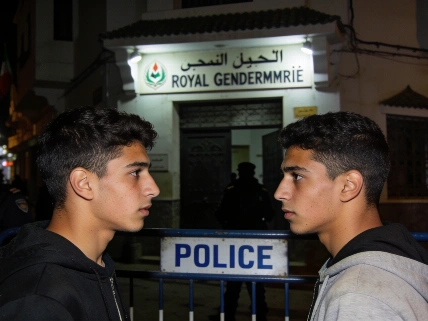
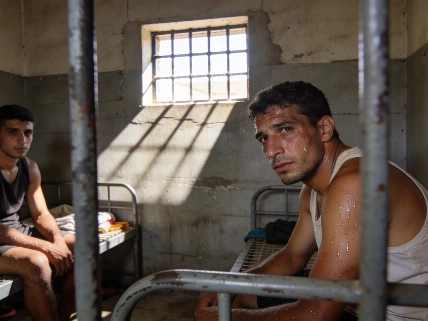
Behind the scenes, the Alawite monarchy and its deep-state network, the makhzen, have built a system of control that goes well beyond the visible government. Journalist Ali Lmrabet calls this network a "patriotic police" that uses advanced surveillance technology-often bought from Israel, including the Pegasus spyware allegedly used against Spain's Prime Minister Pedro Sánchez-to monitor and suppress opposition. Social protests, like last year's Gen Z 212 movement, have been broken up. Official figures from the General Delegation for Prison Administration and Reintegration (DGAPR) show that as of July 2026, 662 people linked to the movement were in prison across 52 facilities, with 108 continuing their studies or vocational training (Infobae/EFE). After public anger over the deaths of eight women following caesarean sections at Hassan II Hospital in Agadir, authorities increased health and education spending by 16% to 140 billion dirhams, according to government communiqués cited by MAP.
Moroccan political parties are allowed to run in elections, but are widely seen as unable to bring real change. Many people see leaving the country as the only way out. This pattern is not unique to Morocco. As reported earlier, the regime's economic approach in Western Sahara has also drawn international criticism, with warnings that resource-driven development can reinforce political realities at the expense of local communities. Regional observers from the African Union and the UN Economic Commission for Africa have repeatedly called for more inclusive growth across the Maghreb.
Europe's border outsourcing and the migration dilemma
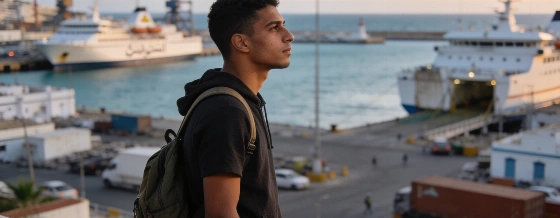
Europe's dependence on Morocco to police its southern border has only strengthened the monarchy's position. EU funding and diplomatic support have helped keep the regime stable, even as the root causes of migration-economic exclusion and political repression-go unaddressed. The idea that economic growth alone will stop migration does not match reality: as living standards rise slightly, more Moroccans gain the means and motivation to seek better lives abroad, especially those with education and ambition. According to the Ministry of Foreign Affairs, over 100,000 Moroccans applied for visas to Schengen countries in 2025, a figure also reported by APS and TAP in their regional migration coverage.
The result is a regime skilled at projecting modernity and stability to foreign partners while keeping tight control at home. The visible signs of progress-stadiums, trains, investment deals-hide a growing crisis of legitimacy and opportunity. Unless Morocco's rulers address the need for broader prosperity and greater political openness, the exodus of young people will continue, and Europe's border policies will remain a temporary fix rather than a real solution.