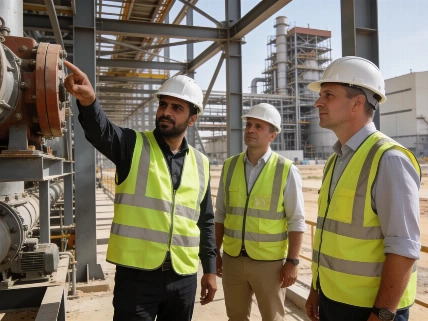

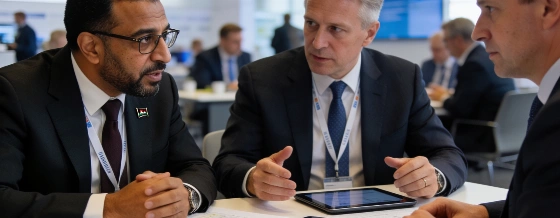
Libya's Minister of Oil and Gas Khalifa Abdel Sadig met with ConocoPhillips executives at the ONS 2026 Conference in Norway to advance investment plans, accelerate development of the Waha concessions, and support production growth in Libya's oil sector.
Libya's Minister of Oil and Gas, Khalifa Abdel Sadig, held talks with senior ConocoPhillips executives on the sidelines of the ONS 2026 Conference and Exhibition in Stavanger, Norway, from 24 to 27 August. The meeting brought together Kirk Johnson, Executive Vice President of Global Operations and Technical Functions, and Steinar Fagge, President for Europe, the Middle East, and Africa at ConocoPhillips, to discuss the company's investment strategy for Libya's oil sector.
Discussions focused on ConocoPhillips' plans for the next phase of investment, particularly in the Waha concessions, following the 2026 agreement that extended these concessions until 2050. Both sides reviewed development programmes aimed at increasing production, with an emphasis on deploying modern technologies and building national expertise within Libya's oil industry.
Accelerating Project Implementation and Addressing Challenges
Minister Khalifa Abdel Sadig stressed the importance of expediting the implementation of agreed investments and development projects. He highlighted the need to address operational challenges to ensure production targets are met and to reinforce the long-term partnership between Libya and ConocoPhillips. The meeting was also attended by Faisal Miloud, Chairman of Zueitina Oil Company, and Salem Amdeqish, Libya's Ambassador to Denmark and Norway.
Strategic Importance for Libya's Oil Sector
The renewed focus on investment and technology transfer is seen as critical for Libya's efforts to stabilise and expand its oil output, which remains a cornerstone of the country's economy. The engagement with ConocoPhillips comes as Libya seeks to attract further international investment and expertise to support its energy sector. This approach aligns with broader government initiatives to stimulate economic development, as seen in other sectors such as housing, where the National Housing and Real Estate Development Programme recently signed contracts for new units in Misrata, detailed in this report on Libya's housing project expansion.
What to Watch Next
Key developments to monitor include the pace of project implementation in the Waha concessions, the impact of new technologies on production levels, and the resolution of any operational or regulatory challenges that may arise. The outcome of these efforts will be significant for Libya's oil revenues and its broader economic recovery.