
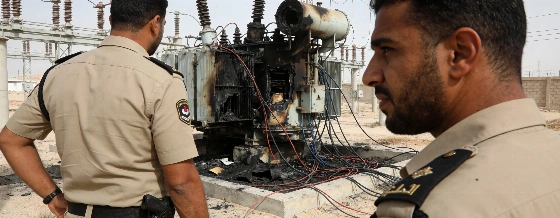
Libya has formally asked the International Criminal Court for technical and legal support to investigate recent attacks on key electrical facilities in Tripoli and Zawiya, citing risks to national stability and the possibility of crimes against humanity.
Libya's government has asked the International Criminal Court to help investigate a series of sabotage attacks on electrical facilities in Tripoli and Zawiya. This request marks an unusual step toward involving international justice in what Libyan officials describe as a coordinated effort to damage essential infrastructure. Regional news agencies, including Tunis Afrique Presse and the Algerian Press Service, have been following the situation closely.
The Libyan Presidential Council says it wants the ICC's technical and legal support to strengthen ongoing domestic investigations. Authorities hope international experts can help clarify what happened and identify those responsible. The investigation covers attacks on both electricity and fuel infrastructure, which are central to Libya's economic recovery and energy trade. The African Union Peace and Security Council has also commented on the issue in recent statements.
Sabotage campaign and national security risks
Libyan agencies believe these attacks are part of a broader campaign targeting critical infrastructure, not just isolated incidents. Officials say the sabotage put civilians at risk and threatened national security during the incidents. The Ministry of Interior has warned that such attacks endanger civilian life and disrupt Libya's fragile post-conflict recovery, a concern also raised by the United Nations Economic Commission for Africa.
Security services report that they have managed to disrupt or delay further attacks in recent weeks. In September 2026, the Government of National Unity announced it had dismantled a "sabotage cell" and arrested five people-both Libyans and foreigners-suspected of organizing drone attacks on oil and electricity sites in Tripoli and Zawiya. The government's legal statement argues that these acts could qualify as crimes against humanity or even genocide under international law, though this is the government's position and not a finding by the ICC or any independent court.
Economic impact and regional context
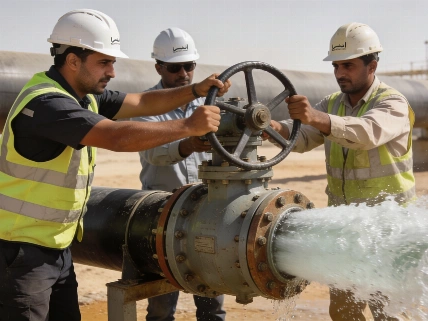
The attacks have affected Libya's energy sector. On 15 September 2026, the National Oil Corporation (NOC) reported that a key valve on the Al-Hamada-Zawiya pipeline was closed, forcing three major sites-Hamada (NC8), Tahara (NC4), and station NC5-to halt operations. The NOC warned it might declare force majeure if the blockade continued, which could affect regional energy markets and trade with neighboring Maghreb countries. Despite these problems, NOC Chairman Masoud Suleiman said Libya's oil production was still about 1.4 million barrels per day, according to Reuters.
Libya has been working to modernize and protect its infrastructure as part of its post-conflict recovery. As reported earlier, authorities are also trying to restart stalled border inspection projects, highlighting the ongoing challenge of securing national assets from both internal and external threats. These efforts are watched closely by regional partners, including Morocco's Ministry of Foreign Affairs and the African Union, given the interconnected nature of energy and security in the Maghreb.
Editorial analysis
Libya's decision to involve the International Criminal Court is an attempt to raise the stakes for those behind the sabotage and to show that such acts will be pursued under international law. By framing the attacks as possible crimes against humanity, the government is seeking both technical help and the ICC's authority to deter future incidents and strengthen its own position. This move underscores how vulnerable Libya's infrastructure remains and the ongoing struggle to restore state control. The results of this cooperation with the ICC will test both Libya's ability to respond and the international community's willingness to engage with the country's security problems.