
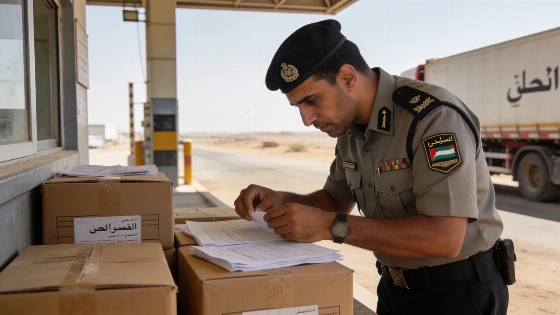
Libya's Ministry of Economy and Trade has imposed sweeping new controls on commercial imports, aiming to halt the outflow of hard currency through fraudulent letters of credit and under-invoiced shipments. The ban on informal imports takes effect September 30.
Libya's government has drawn a hard line against the country's chronic currency leakage, announcing a ban on all informal commercial imports in a bid to choke off the smuggling of hard currency abroad. The new rules, set to take effect September 30, target the shadowy trade networks that have exploited loopholes in the banking and customs system for years.
At the heart of the crackdown is decision 449/2026, issued by the Tripoli-based Ministry of Economy and Trade under Suhail Abu Shiha. The move redefines what counts as an import, making clear that any goods or merchandise entering Libya for trade or resale-regardless of how or where they cross the border-fall under the new regime. The message is blunt: no more backdoor shipments, no more creative invoicing, and no more bypassing the Central Bank of Libya's official channels.
How the new controls work
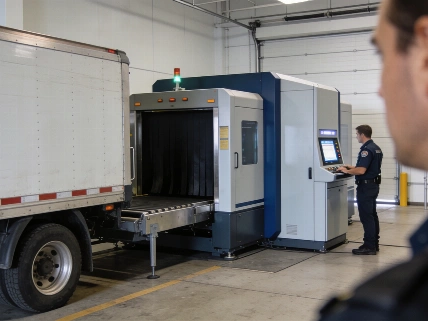
Under the new system, commercial shipments will be blocked at customs unless importers can prove they have met all banking, commercial, and customs requirements, including submitting documentation that verifies the true value of the goods. The Central Bank of Libya's definition of official banking channels is now the only route for trade-related foreign currency transactions. Any attempt to import for trade outside these channels is banned outright.
There is a narrow carve-out for sole traders-small business owners-who can continue to import within a set annual limit, provided they hold a valid business license and comply with all regulatory requirements. Even then, they must document the real value of their shipments. Transitional provisions exist for shipments already in process before the September 30 deadline, but these are tightly regulated and subject to oversight by the relevant authorities.
Currency fraud and the regional context
The decision is a direct response to years of abuse in Libya's import system, where undervalued or fictitious shipments have been used to siphon hard currency out of the country. Fraudulent letters of credit and under-invoicing have drained Libya's reserves, undermined the official exchange rate, and fueled a parallel market for dollars. The authorities are now betting that stricter controls will finally close these loopholes.
Libya is not alone in facing such challenges. Across North Africa, governments have struggled to contain financial fraud linked to trade and banking. As reported earlier, Algeria's postal authority recently warned of a surge in fraudulent transfer schemes as new banking services come online, highlighting the region-wide vulnerability to currency manipulation and illicit capital flows.
Winners losers and what comes next
The winners from Libya's new policy are clear: the state, which stands to regain control over its foreign currency reserves, and legitimate businesses that have long been undercut by competitors gaming the system. The losers are the informal traders and networks that have thrived on regulatory gaps, as well as anyone hoping to move money out of Libya through disguised trade.
Implementation will be the real test. The decision hands broad enforcement powers to customs, banking, and commercial authorities, but the effectiveness of the crackdown will depend on their ability to coordinate and resist pressure from entrenched interests. If the rules are enforced as written, Libya could see a sharp reduction in currency smuggling and a more stable trade environment. But if enforcement falters, the black market will simply adapt, and the cycle of fraud will continue. For now, the government's intent is unmistakable: the era of easy currency flight via fake imports is officially over.