
Libya has issued a forceful condemnation of Houthi attacks on multiple southwestern Saudi cities, declaring full support for Saudi Arabia's right to defend its territory and calling for stronger regional security coordination.
Libya's government has moved swiftly to condemn the latest wave of Houthi attacks on Saudi Arabia, warning that the targeting of civilian infrastructure in cities such as Abha, Khamis Mushait, Jazan and Najran represents a dangerous escalation with direct implications for regional stability.
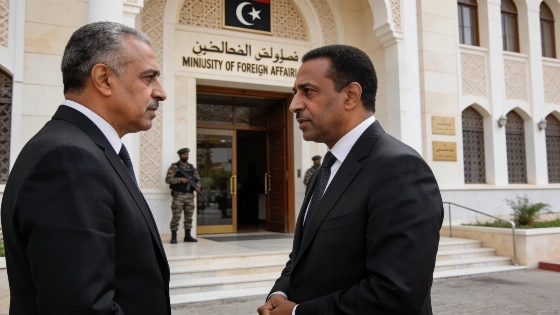
In a statement from Tripoli, the Foreign Ministry made clear that Libya stands in full solidarity with Saudi Arabia, backing any measures Riyadh deems necessary to protect its citizens, residents and national assets. The Libyan authorities left no ambiguity: attacks on civilian facilities and the endangerment of non-combatants are not only morally indefensible but also constitute a flagrant breach of international law and humanitarian norms.
Libya's stance and the regional security equation
By publicly aligning itself with Saudi Arabia, Libya is signaling its intent to be counted among those regional actors unwilling to tolerate cross-border violence or the normalization of attacks on civilian targets. The statement's language-repudiating all forms of violence and supporting international de-escalation efforts-reflects a calculated diplomatic posture aimed at reinforcing Libya's credentials as a responsible state actor, even as it continues to grapple with its own internal security challenges.
This move also underscores the interconnectedness of security threats across North Africa and the Arabian Peninsula. Instability in one state, especially when it involves attacks on critical infrastructure, can quickly ripple across borders, threatening the fragile balance of power and undermining efforts to build a more secure regional order.
International law and the cost of escalation
Libya's Foreign Ministry did not mince words in its assessment: targeting civilian facilities is a grave violation of international law. The statement pointedly referenced the risk that such attacks pose to Saudi Arabia's security and stability, implicitly warning that unchecked escalation could draw in additional regional actors or trigger broader retaliatory measures.
While Libya's own capacity to project power remains limited, its diplomatic alignment with Saudi Arabia is a clear attempt to position itself on the side of international norms and collective security. The message to both regional partners and external observers is unambiguous: Libya rejects the logic of violence and supports coordinated action to prevent further destabilization.
Libya's condemnation of the Houthi attacks is more than a routine gesture of solidarity. It is a calculated signal that Tripoli intends to play a constructive role in shaping the region's security architecture, even as it seeks to rebuild its own institutions. The real test will be whether such statements translate into meaningful cooperation or remain symbolic. For now, Libya's unequivocal stance puts pressure on other North African states to clarify their own positions-and exposes the uncomfortable reality that regional security is only as strong as its weakest link.