Libya's Ministry of Interior has confirmed that petrol supplies in Tripoli remain sufficient, urging residents not to crowd fuel stations as new shipments arrive and 24-hour distribution continues to address congestion.
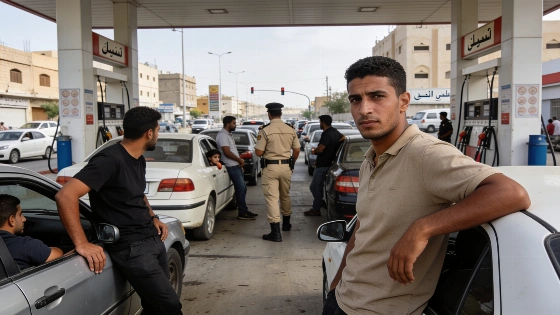
Libya's Ministry of Interior says petrol supplies in Tripoli are adequate and distribution will continue around the clock, even as long queues persist at stations across the capital. The congestion has raised concerns about possible shortages and traffic disruption. The ministry has urged residents not to rush for fuel while new shipments are unloaded and distributed.
The ministry said a tanker carrying approximately 40 million litres of petrol recently docked at Tripoli port, and distribution to stations is under way. A second tanker carrying a similar volume is expected in the coming days. The arrivals are intended to reinforce supply, though reliable availability also depends on depot capacity, transport routes and station-loading facilities.
Authorities Urge Calm and Traffic Management
The Ministry of Interior has called on citizens to avoid unnecessary crowding at petrol stations and refrain from blocking roads. There is no need to rush for fuel, it said, as pumping and distribution will continue 24 hours a day. To ease congestion and maintain order, the ministry has tasked security directorates and other agencies with securing fuel stations and managing traffic flows in affected areas.
The queues reflect wider weaknesses in Libya’s fuel-distribution system, including limited storage capacity and bottlenecks in transport and pumping infrastructure. At an October 2026 technical meeting, the National Oil Corporation (NOC) and Brega Oil Marketing Company discussed improving depot readiness, addressing delayed projects and preparing engineering studies for fuel-supply pipeline routes from the Zawiya refinery. The meeting also covered inspection and measurement procedures alongside safety controls. Participants considered potential third-party investment in storage and facilities, and called for more efficient infrastructure and a sustainable flow of fuel across the country.
Supply pressures are also linked to the heavily subsidised fuel system. A United Nations assessment cited by Radio France Internationale estimated that between 30% and 50% of Libya’s imported fuel is diverted by smuggling networks, putting the annual cost of fuel trafficking at nearly $7 billion. The assessment described subsidised fuel moving through pipelines, ships and tanker trucks towards Sudan, Chad, Niger, Italy and Turkey. Libya’s pump price was reported at about €0.20 per litre. The wide gap with international prices creates an incentive for illicit resale. UN Special Representative Hanna Tetteh said the state faces an increasing budget burden for subsidised fuel that residents do not benefit from once it is diverted.
The issue has also featured in wider discussions about protecting the country’s oil and fuel resources. On 19 October 2026, UN Deputy Special Representative and Resident Coordinator Ulrika Richardson met NOC chairman Masoud Suleiman to discuss the sector. The UN Support Mission in Libya said the talks addressed “fuel smuggling and the misuse of public resources”. On 22 October, the NOC separately reported that individuals had shut a valve at a receiving station beside the Zawiya refinery. The closure affected the 18-inch Hamada-Zawiya crude pipeline, which carries crude from the Hamada and al-Tahara fields towards the Zawiya area. The NOC warned that the closure would “reflect negatively on production rates, affecting the country’s economy”.
What to Watch: Next Fuel Shipment and Distribution Continuity
Authorities aim to stabilise the situation and prevent further disruption when the next tanker arrives. The measures will be tested as the shipment is unloaded and distributed. Station queues and traffic conditions will show whether the ministry’s interventions are easing congestion in Tripoli, while broader infrastructure and supply challenges remain part of the longer-term response.