
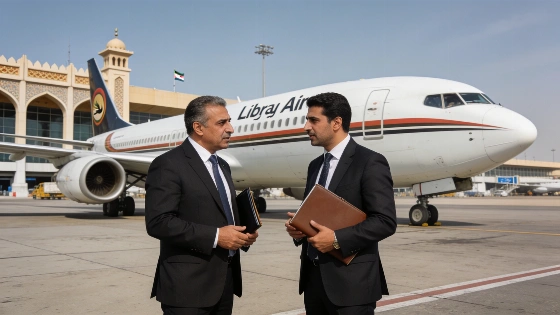
Libyan Airlines is pushing to reestablish direct flights to Syria, with aviation authorities in Damascus and Tripoli negotiating operational and security requirements. The talks signal a broader push to reconnect Syria with North Africa and Europe after years of suspended routes.
Libyan Airlines is making its most determined effort in years to break out of regional aviation isolation, launching formal negotiations with Syrian authorities to restore direct flights between Tripoli and Damascus. The move, if implemented, would mark a rare reopening of airspace between two countries long cut off by conflict and sanctions.
At the heart of the talks is a push by Libyan Airlines' Regional Director in Syria, Mohammad Mahfouz Douma, who led a delegation to Damascus for high-level meetings with Syrian Civil Aviation officials. The agenda: hammering out the operational, technical, and security requirements needed to restart regular passenger service, a step that would require both regulatory green lights and practical coordination on the ground.
Regional aviation thaw gathers pace
The Libyan-Syrian negotiations are not happening in a vacuum. In recent weeks, Egypt's Ministry of Civil Aviation and the Egyptian Civil Aviation Authority have dispatched teams to inspect Damascus and Aleppo airports, reviewing procedures ahead of a possible resumption of direct Egypt-Syria flights. Meanwhile, German carriers Eurowings and Lufthansa have sent their own delegations to Damascus International Airport, probing the technical and operational landscape for potential new routes to Germany.
This flurry of activity signals a calculated effort by Syria to re-anchor itself in regional and international air networks after years of near-total isolation. For Libya, the stakes are equally high: restoring air links could facilitate business, family reunification, and diplomatic engagement, while also offering a symbolic break from the country's own era of fragmentation and travel restrictions.
Operational hurdles and political calculations
According to the General Authority of Civil Aviation and Air Transport, the Damascus meeting focused on the air transport agreement between Syria and Libya, as well as the specific operational and security protocols required for Libyan Airlines to resume flights. Director of Aviation Security Ghayth Sulaiman and Director of International Cooperation Raafat Kanno represented the Syrian side, underscoring the technical complexity and political sensitivity of the process.
While the talks are framed as technical, the underlying reality is that every new route requires not just regulatory compliance but also tacit political approval from multiple actors. The resumption of flights would signal a shift in both countries' willingness to re-engage, even as broader regional dynamics remain unsettled. For context, Libya's recent moves to stabilize key sectors-such as the imposition of a flour price ceiling to address bread market volatility, as reported earlier-reflect a broader push to restore normalcy and state capacity.
Winners, losers, and the next test
If Libyan Airlines succeeds in relaunching flights to Syria, the immediate beneficiaries will be travelers and businesses seeking direct access between the two countries. The move could also set a precedent for other regional carriers weighing a return to Syrian airspace, potentially accelerating the country's reintegration into North African and European aviation corridors. However, the process remains fraught with risk: any misstep on security, compliance, or political optics could trigger renewed restrictions or international pushback.
What is clear is that both Tripoli and Damascus are betting that the benefits of restored connectivity outweigh the risks of continued isolation. The real test will come not in the signing of agreements, but in the actual takeoff of the first scheduled flight-a moment that would mark a tangible shift in the region's aviation and diplomatic landscape. For now, the negotiations are a reminder that in North Africa, even the reopening of a single air route is never just about transport-it is a barometer of political will, institutional capacity, and the slow, uneven return to normalcy after years of crisis.