
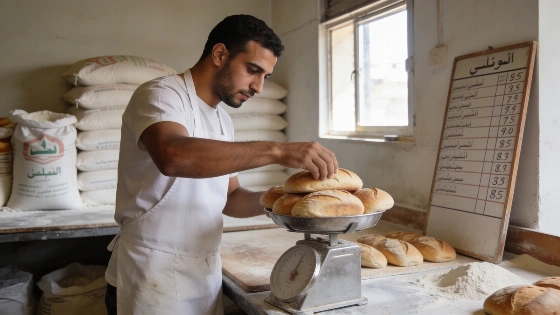
Libya has set a maximum price of 280 dinars per qintar for flour sold to bakeries, aiming to curb bread price volatility and address subsidy abuse. The move follows a summer of shortages and signals tighter state-market coordination.
Libya's government has drawn a hard line on bread prices, imposing a strict cap of 280 dinars per qintar (100 kg) for flour sold to bakeries-a move that exposes the country's chronic vulnerability to food supply shocks and the political sensitivity of bread in daily life.
This intervention comes after a summer marked by acute bread shortages, power cuts, and fuel disruptions that forced bakeries to shrink baguette sizes, hike prices, or shut down entirely. The bread crisis, a recurring flashpoint in Libya's cost-of-living struggles, has now triggered a rare alignment between state authorities and private flour mills.
Why mills are playing ball with the state
Privately-owned flour mills have not resisted the price ceiling. Their compliance is less about public spirit and more about survival: these mills depend on the state to open letters of credit at the official exchange rate, allowing them to import grain at a fraction of the real market cost. Without this financial lifeline, their business model would collapse. The unspoken deal is clear-cooperate on politically sensitive bread pricing, or risk losing access to cheap foreign currency and, by extension, the market itself.
Eight mills have already begun selling flour at the new capped price, according to the Libyan Industry Union (LIU). The LIU, which brokered the agreement alongside the Ministry of Economy and Trade and the Central Bank of Libya, claims the measure will ensure fair flour prices for bakeries and help stabilise the cost of bread and other essentials for Libyan households.
New oversight and the fight against subsidy abuse
The price cap is only one part of a broader state push to regulate the bread sector. A new Memorandum of Understanding, signed by the Ministry of Industry and Minerals and the Ministry of Local Government, launches the National Initiative for Stabilizing and Supporting the Bread Industry. The plan targets Libya's 1,876 bakeries, tying flour quotas to actual production and deploying an integrated electronic and field-based monitoring system. Municipal offices, the Municipal Guard, and the Bakers' Syndicate will coordinate to enforce quality and weight standards, aiming to prevent the diversion of subsidised flour and diesel to the black market-a chronic source of corruption that has long undermined subsidy policy.
Subsidies in Libya are a double-edged sword. While they keep bread affordable, they also create lucrative opportunities for fraud. Subsidised flour and diesel often end up in patisseries, pizza shops, or on the black market, where diesel fetches many times its official price. The new oversight system is designed to close these loopholes, but its effectiveness will depend on the state's ability to enforce compliance across a fragmented and often opaque supply chain.
Political stakes and public pressure
Bread is not just a staple in Libya-it is a political barometer. The public's patience with recurring shortages and price hikes is wearing thin, especially as perceptions grow of a cosy relationship between government and big business. Smaller companies, often locked out of the state's foreign currency facilities, have struggled to compete, fuelling resentment and calls for greater transparency. The government's latest move is an attempt to reassert control and demonstrate responsiveness to public anger, but it also exposes the fragility of Libya's subsidy-driven food system.
Regional food supply dynamics remain volatile. As reported earlier, shifts in regional import patterns are reshaping North Africa's food security landscape, with Libya's own bread sector now under tighter scrutiny than ever.
Libya's flour price ceiling is a tactical response to a crisis of its own making-one rooted in subsidy mismanagement, weak oversight, and the political imperative to keep bread affordable at all costs. The real test will be whether the new controls can outpace the ingenuity of those who profit from subsidy abuse. For now, the government has bought itself time, but unless structural reforms follow, the next bread crisis is only a blackout or supply glitch away.