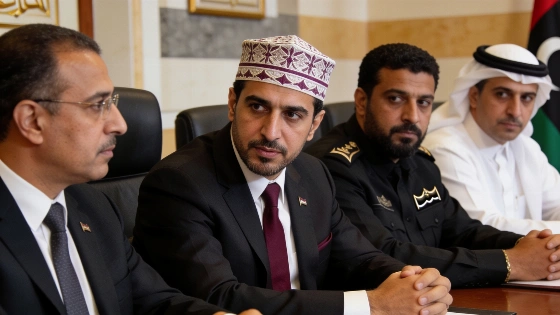
Qatar is intensifying its diplomatic engagement in Libya, meeting rival leaders in Tripoli and Benghazi to support a fragile UN-backed election plan. The move exposes deep institutional rifts and raises the stakes for regional influence in North Africa.
Libya's political deadlock has become a proving ground for regional power brokers, and Qatar is now betting it can succeed where others have failed. The latest diplomatic offensive saw Qatari Minister of State Mohammed bin Abdulaziz al-Khulaifi land in Benghazi for direct talks with Khalifa Haftar, after high-level meetings in Tripoli with Abdul Hamid Dbeibah and other western officials. This is not a routine visit. It is a calculated intervention at a moment when Libya's future hangs on a threadbare election pact that few trust and even fewer believe will hold.
At the heart of the current crisis is a so-called 24-month roadmap, drafted by the 4+4 committee-an uneasy coalition of representatives from the eastern House of Representatives and the Tripoli-based High Council of State. The plan promises new electoral laws and a path to long-delayed presidential and legislative votes. Yet the process is already under fire. Key Libyan factions say they were excluded from negotiations and have not even seen the final text. The result is a blueprint that looks impressive on paper but is dangerously fragile in practice.
Qatar's Calculated Entry and Regional Stakes
Doha's engagement is not limited to symbolic gestures. Al-Khulaifi's meetings covered not just elections, but also economic cooperation, health, energy, and joint security arrangements-especially on irregular migration, where Turkey and Italy are also active. By talking to both Tripoli and Benghazi, Qatar positions itself as one of the few actors with access to all sides, a rare asset in Libya's fractured landscape. The timing is no accident. As regional powers compete for influence in North Africa, stability in Libya is now a strategic prize, affecting trade, migration flows, and the balance of power across the Mediterranean.
But the new roadmap's biggest flaw is its silence on who governs Libya during the transition. Without a neutral interim authority accepted by both armed camps, the risk is clear: elections become a distraction, not a solution. Local analysts warn that unless this power vacuum is addressed, the process will collapse under the weight of mutual distrust and institutional gridlock.
What Must Change for Real Progress
For Qatar's mediation to avoid joining the long list of failed peace efforts, three immediate shifts are essential. First, the negotiation table must expand to include sidelined political figures and municipal leaders, not just the usual elite power brokers. Second, the interim period needs a credible, neutral administrative body to manage state resources and security forces-without this, any election timeline is a fiction. Third, international backers must enforce real accountability, tying diplomatic support to strict adherence to deadlines and consequences for spoilers.
Libyans have endured a decade of empty promises and endless transitions that serve only entrenched elites. Unless Qatar and its partners force a genuine compromise on power-sharing, the country will see more diplomatic handshakes, more blueprints, and the same entrenched division. The real test is not in the next round of talks, but in whether anyone is willing to break the cycle of exclusion and impunity that has defined Libya's lost decade.