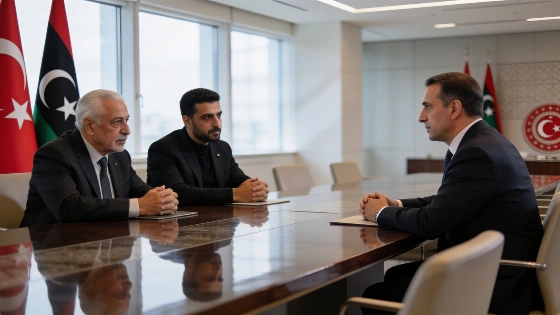
In a pivotal Ankara meeting, Turkish intelligence chief Ibrahim Kalin brought together Libya's rival parliamentary leaders for direct talks on unifying Libya's fractured institutions and advancing stalled elections, signaling a potential shift in the country's deadlocked political landscape.
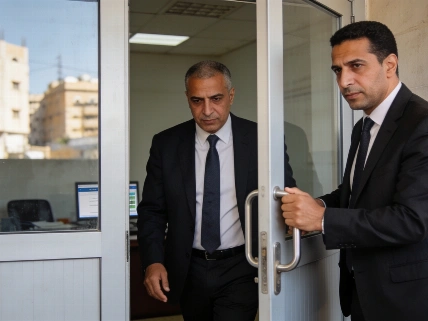
For the first time, the heads of Libya's House of Representatives and High Council of State sat down together in Ankara, orchestrated by Turkish National Intelligence Organization chief Ibrahim Kalin. This direct engagement marks a rare moment of progress in Libya's long-stalled efforts to unify its divided political and military institutions.
The meeting's significance lies not in diplomatic ceremony but in the hard reality that previous attempts-whether by regional actors or international mediators-have failed to break the deadlock over Libya's executive authority and the path to national elections. By convening Aguila Saleh and Mohammed Takala in the Turkish capital, Ankara has positioned itself as a central broker in the next phase of Libya's state-building struggle.
Libya's institutional rift and the Turkish intervention
Libya's political landscape remains fractured between rival authorities in the east and west, with the House of Representatives and High Council of State each claiming legitimacy. The inability to agree on a unified executive, hold presidential and parliamentary elections, or integrate military structures has left the country in a state of chronic instability. The Ankara talks focused on concrete steps to bridge these divides, with both Libyan leaders reportedly agreeing on the need for political unity and institutional integration.
Security sources confirmed that the discussions addressed not only the mechanics of cooperation between Libya and Türkiye but also the broader challenge of achieving a lasting consensus among all factions. The roles of the House of Representatives and High Council of State were underscored as pivotal for any sustainable solution. Yet, despite years of initiatives, no binding agreement has emerged-until now, when both sides signaled willingness to move beyond entrenched positions.
Regional stakes and the search for stability
Turkey's move to host and mediate these talks is not occurring in a vacuum. The regional contest for influence in Libya remains fierce, with external powers vying for leverage over the country's future. Ankara's intervention follows a pattern of assertive diplomacy, reminiscent of Algeria's recent push for technical cooperation with Niger, as reported earlier. The difference here is the direct involvement of intelligence leadership, signaling a shift from symbolic gestures to operational engagement.
For Libya, the stakes are existential. Without unified institutions, the prospects for credible elections and national reconciliation remain remote. The Ankara meeting's outcome-an agreement on objectives but not yet on mechanisms-offers a glimmer of hope, but also a reminder of how fragile progress remains in the face of entrenched rivalries and external interests.
Turkey's calculated gamble to bring Libya's rival leaders to the table may finally force movement on issues that have languished for years. But unless these talks translate into enforceable commitments and real institutional integration, the risk is that Ankara's breakthrough becomes just another footnote in Libya's cycle of failed mediation. The coming weeks will reveal whether this intervention marks a turning point or simply another round in the region's high-stakes contest for influence over Libya's future.